Vinegar Coleslaw
Recipe by Steven Weitzman, founder & head chef of Grilly CheesePublished 2026-10-25Updated 2026-10-25
Vinegar coleslaw with crisp cabbage, carrot, and a tangy cider dressing. This no-mayo side takes 15 minutes of prep and pairs well with grilled cheese.
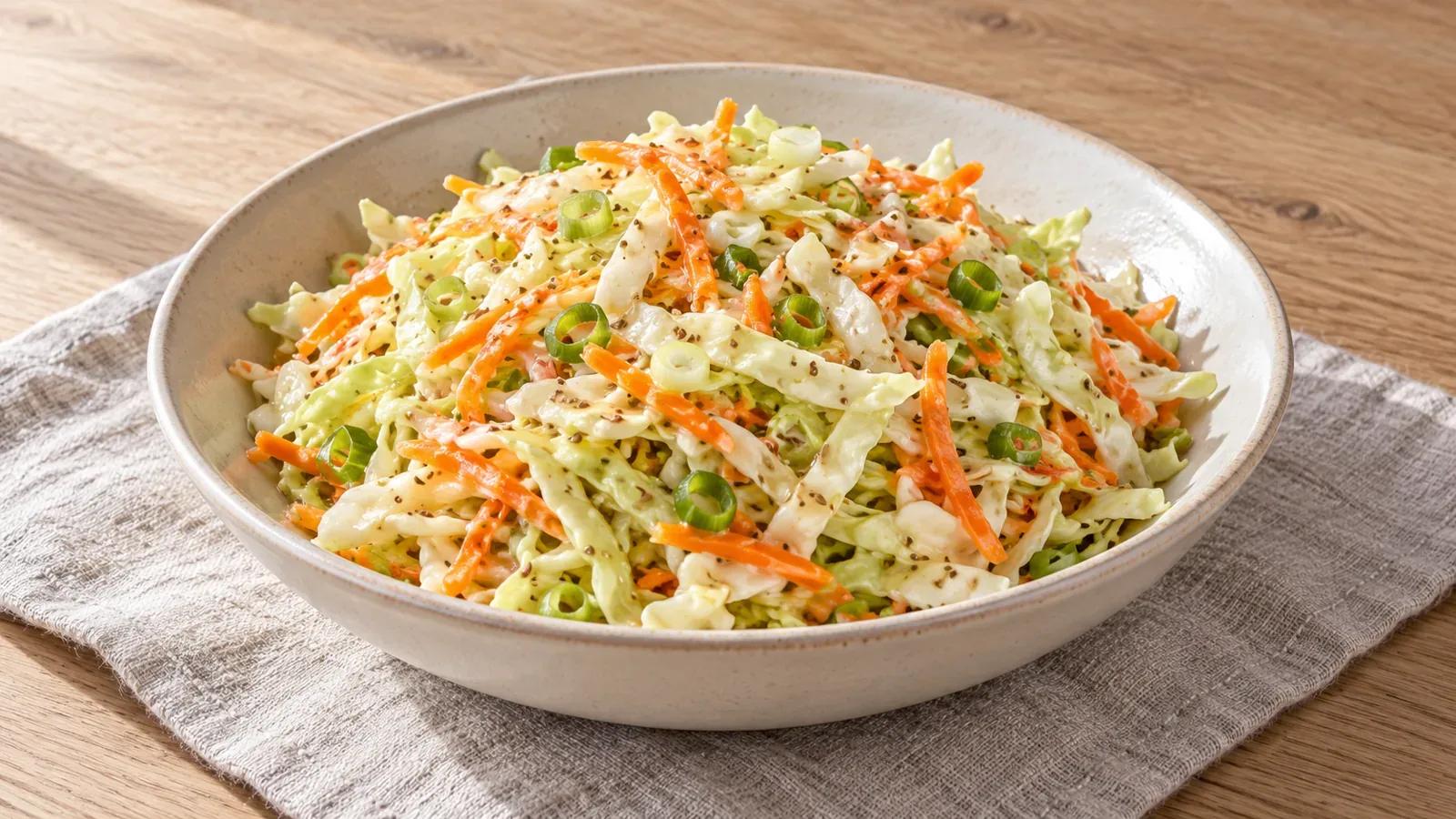
Vinegar coleslaw is a crunchy, no-mayo cabbage salad tossed with a tangy dressing that balances the richness of a grilled cheese sandwich. This version combines green cabbage, carrot, and scallions with apple cider vinegar, Dijon mustard, and celery seed. It takes 15 minutes of hands-on prep, followed by a 10-minute rest while you cook the sandwiches. The dressing should lightly coat the vegetables rather than pool around them. Serve the slaw beside your sandwich so its dressing stays off the crisp bread.
How to make Vinegar Coleslaw
Makes About 4 cups; 4 side-dish servings. Listed times are estimates; visual and temperature cues control doneness.
15 minCook
0 minRest
10 minTotal
25 minYield
About 4 cups; 4 side-dish servings
Equipment
- Chef's knife and cutting board
- Box grater
- Large mixing bowl
- Small bowl or measuring jug
- Whisk
- Measuring cups and spoons
- Serving spoons
Ingredients
- •4 cups thinly sliced green cabbage, loosely packed (about 10 ounces)
- •1 medium carrot, peeled and coarsely grated (about 1/2 cup)
- •2 scallions, thinly sliced (about 1/4 cup)
- •3 tablespoons apple cider vinegar
- •2 tablespoons olive oil
- •2 teaspoons granulated sugar
- •1 teaspoon Dijon mustard
- •1/2 teaspoon celery seed
- •1/2 teaspoon fine salt
- •1/4 teaspoon freshly ground black pepper
Instructions
- 1
Slice the vegetables
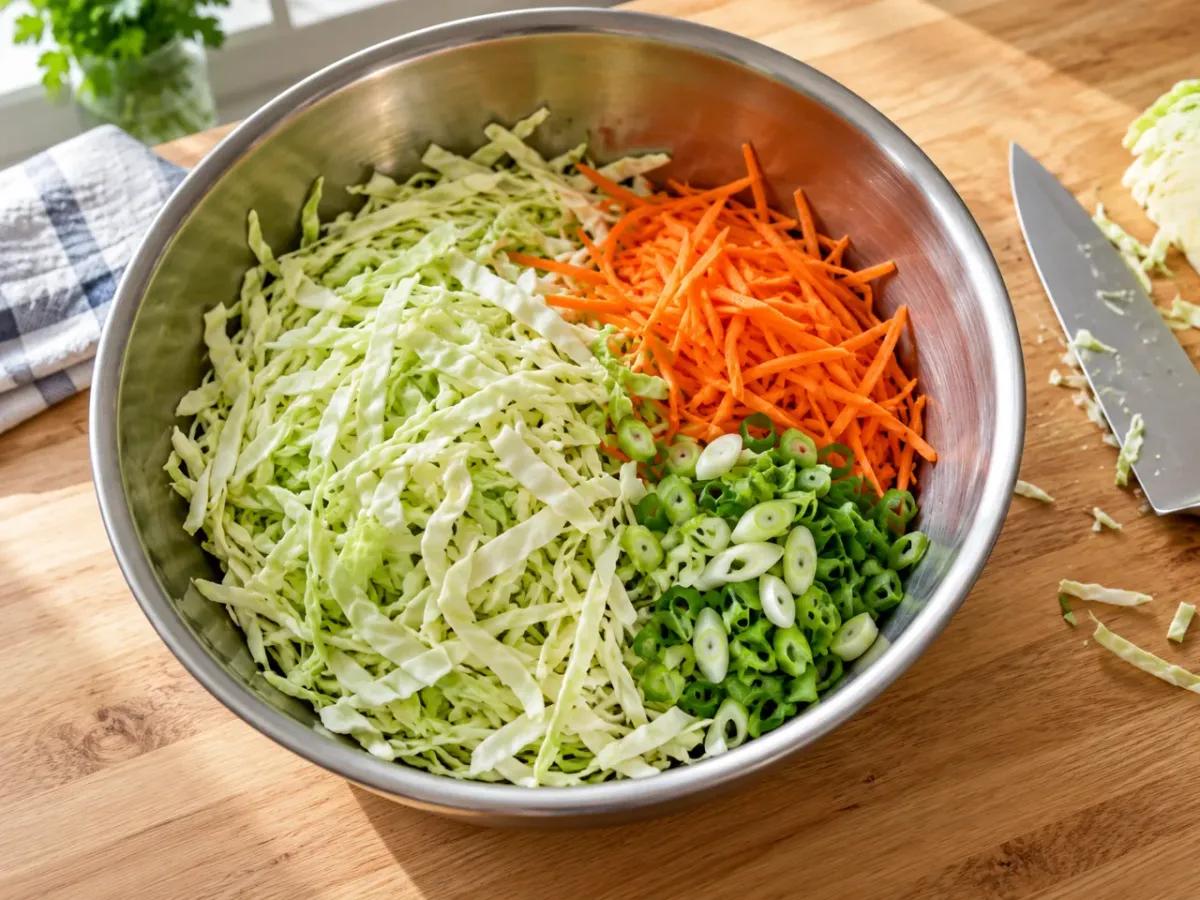
Remove the cabbage core and slice the leaves into ribbons about 1/8 inch wide. Measure 4 loosely packed cups into a large bowl. Add the grated carrot and sliced scallions; toss to combine.
- 2
Whisk the dressing
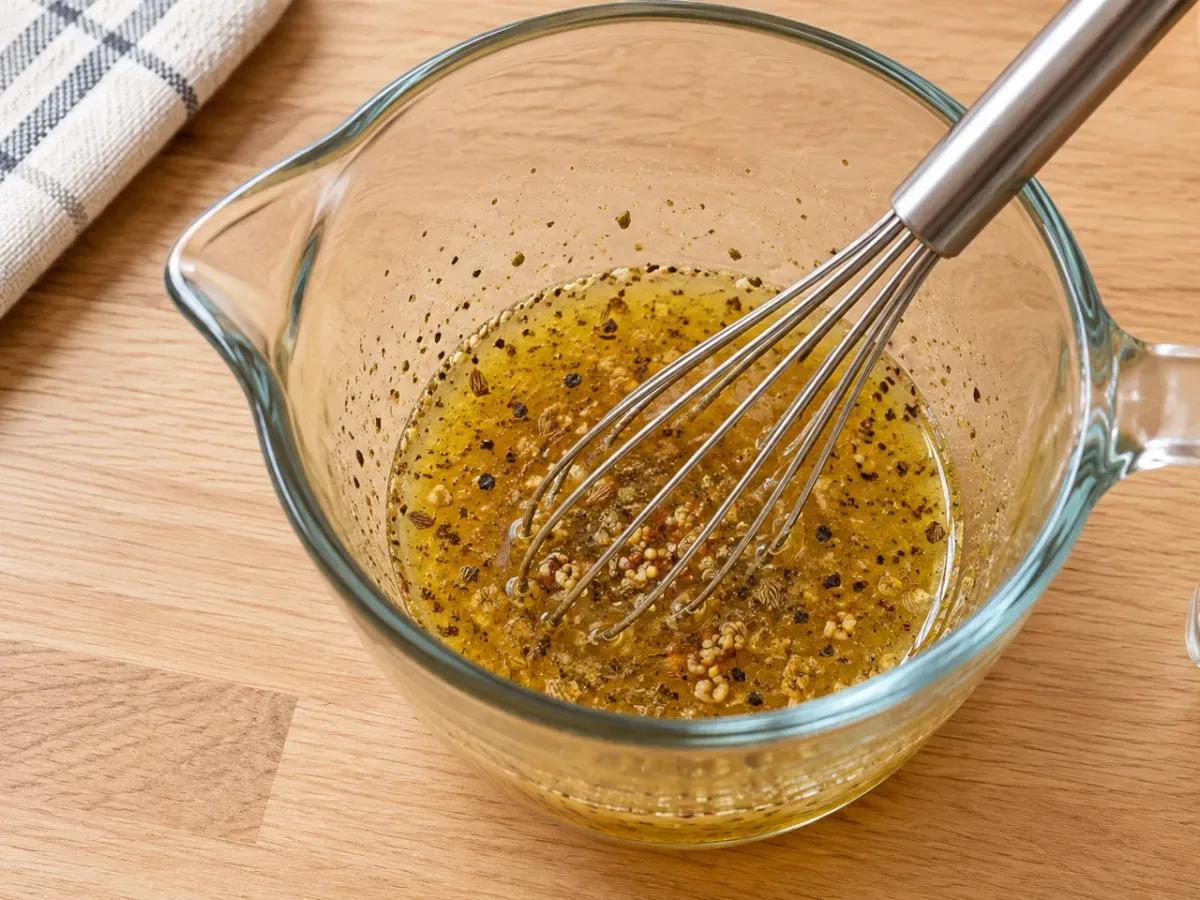
In a small bowl or measuring jug, whisk the cider vinegar, olive oil, sugar, Dijon mustard, celery seed, salt, and black pepper for about 30 seconds, until the sugar dissolves and the dressing looks evenly combined.
- 3
Toss, rest, and serve
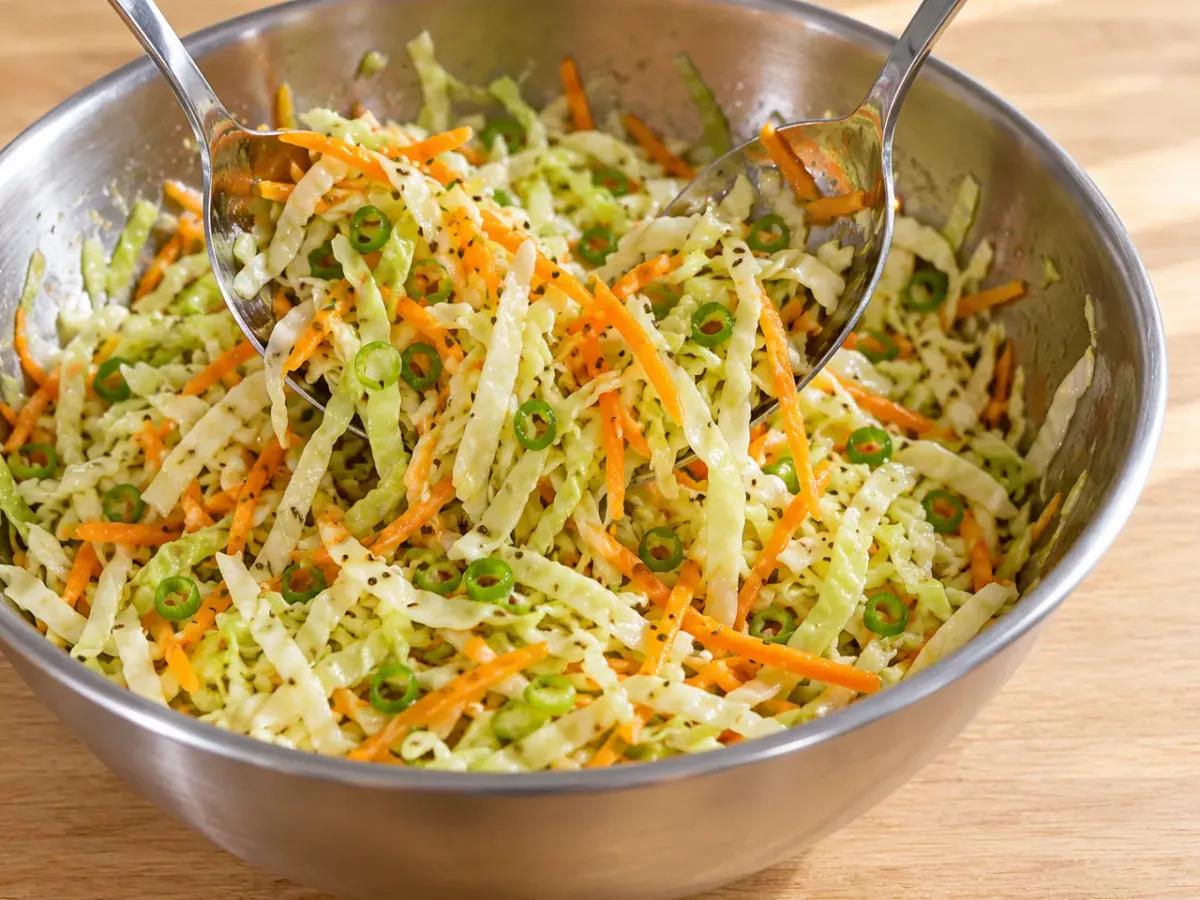
Pour all the dressing over the vegetables. Toss thoroughly for 1 minute, lifting from the bottom to coat the cabbage evenly. Let stand for 10 minutes, then toss again. Taste and adjust the salt if needed. Lift into a serving bowl with serving spoons, leaving excess liquid behind.
Variation
For a sharper slaw, replace 1 tablespoon of the cider vinegar with white vinegar. For less sweetness, use 1 teaspoon sugar instead of 2. Replace 1 cup of the green cabbage with finely sliced red cabbage for color; it may tint the dressing as it stands.
Questions and answers
What is vinegar coleslaw made of?
Vinegar coleslaw is made with shredded cabbage and a vinegar-based dressing rather than mayonnaise. This recipe adds carrot, scallions, olive oil, sugar, Dijon mustard, and celery seed.
What vinegar is best for coleslaw?
Apple cider vinegar gives this slaw a rounded, fruity tang. Distilled white vinegar also works, but tastes sharper; start by replacing just 1 tablespoon of the cider vinegar and adjust to taste.
Can I make vinegar coleslaw ahead of time?
Yes. For the best crunch, prepare the vegetables and dressing separately, refrigerate them, and toss together 10 minutes before serving. Already dressed slaw becomes softer and releases more liquid as it sits.
How do you keep vinegar coleslaw from getting watery?
Dry the vegetables before dressing them and combine them close to serving time. Some liquid release is normal; toss again and transfer the slaw with serving spoons rather than pouring the whole bowl onto the plate.
Does vinegar coleslaw go with grilled cheese?
Yes. Its acidity and cabbage crunch balance melted cheese and buttery toasted bread. Serve it alongside the sandwich to keep the dressing from softening the crust.
Storage and reheating
Grilled cheese is best eaten right away. Refrigerate leftovers promptly in a covered, shallow container at 40°F (4°C) or below, within 2 hours of cooking—or within 1 hour when the temperature is above 90°F (32°C). Use within 3–4 days. Reheat to 165°F (74°C), checking the center with a food thermometer. A skillet over low heat, briefly covered and then uncovered, can warm the center and help restore the crust. If using previously cooked chicken or other leftovers, count storage time from when that ingredient was first cooked. See USDA leftovers guidance and FoodSafety.gov minimum temperatures.
Dietary note: This recipe is labeled vegan as written with the specified products.
Did you make it?
Rate this recipe to help other cooks.
More grilled cheese recipes
Planning an event? Explore hiring a Grilly Cheese food truck.