Olive Tapenade
Recipe by Steven Weitzman, founder & head chef of Grilly CheesePublished 2026-11-22Updated 2026-11-22
Olive Tapenade is a chunky olive-and-caper spread with lemon, garlic, and parsley. Make this anchovy-free version in 15 minutes, then rest for 10 minutes.
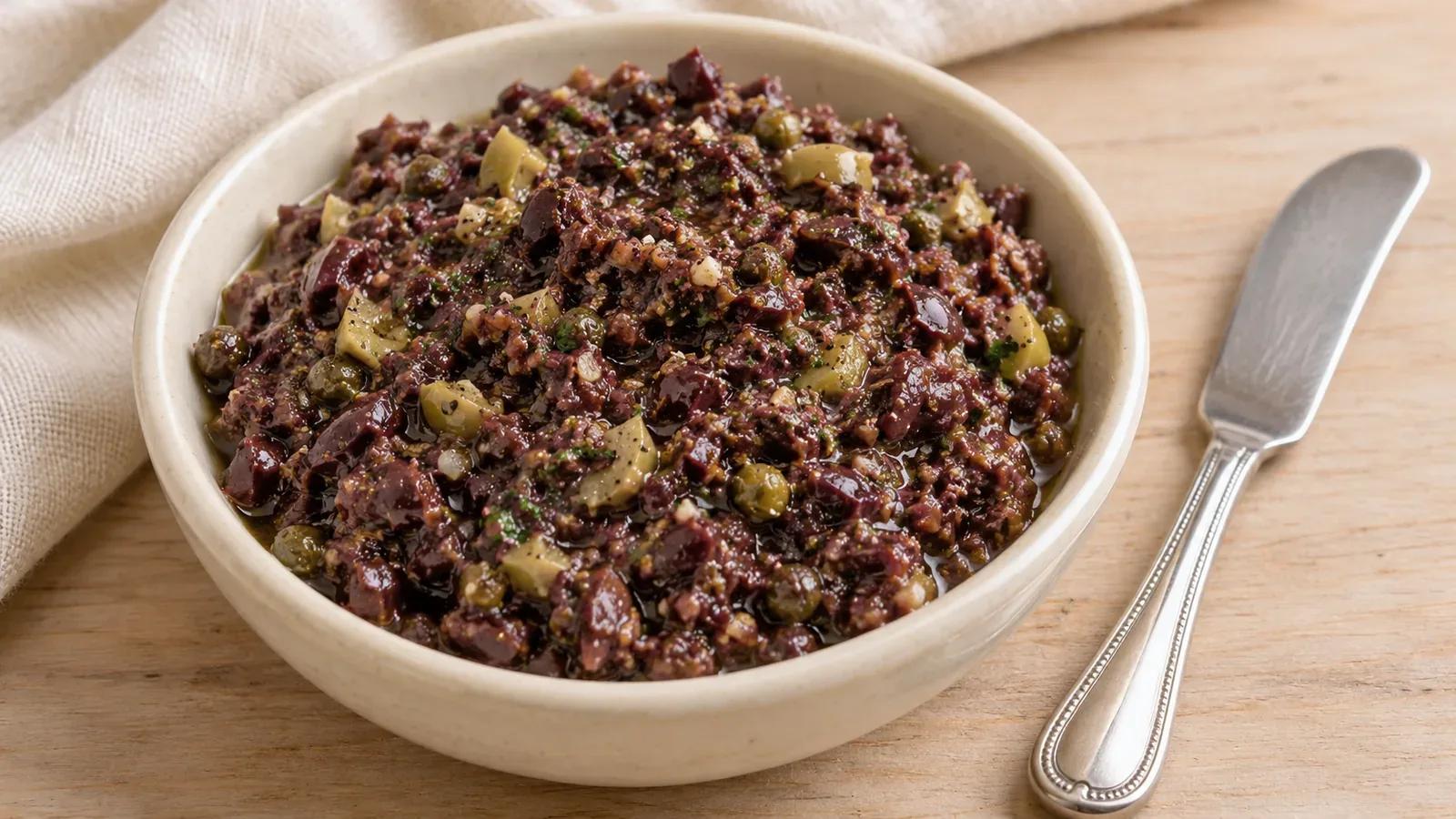
Olive Tapenade is a savory chopped olive-and-caper spread that adds a bright, briny bite to grilled cheese strips or fries with just 15 minutes of prep. This French-inspired version combines Kalamata and green olives with fresh parsley, garlic, and lemon, and leaves out anchovies. A knife does all the work, so you can keep the texture chunky instead of blending it into a smooth paste. Prep: 15 minutes | Cook: 0 minutes | Rest: 10 minutes | Total: 25 minutes Active work: 15 minutes | Servings: 6 | Yield: About 3/4 cup, or six portions of about 2 tablespoons
How to make Olive Tapenade
Makes About 3/4 cup; six servings of about 2 tablespoons. Listed times are estimates; visual and temperature cues control doneness.
15 minCook
0 minRest
10 minTotal
25 minYield
About 3/4 cup; six servings of about 2 tablespoons
Equipment
- Chef's knife
- Cutting board
- Medium mixing bowl
- Measuring cups and spoons
- Spoon
- Fork
Ingredients
- •2/3 cup (100 g) pitted Kalamata olives, measured after draining
- •1/3 cup (50 g) pitted plain green olives, measured after draining
- •1 tablespoon (9 g) capers, rinsed and drained
- •1 small garlic clove, finely minced
- •1 tablespoon finely chopped fresh flat-leaf parsley
- •1 teaspoon (5 ml) fresh lemon juice
- •2 tablespoons (30 ml) extra virgin olive oil
- •1 pinch freshly ground black pepper
Instructions
- 1
Chop the olives and capers
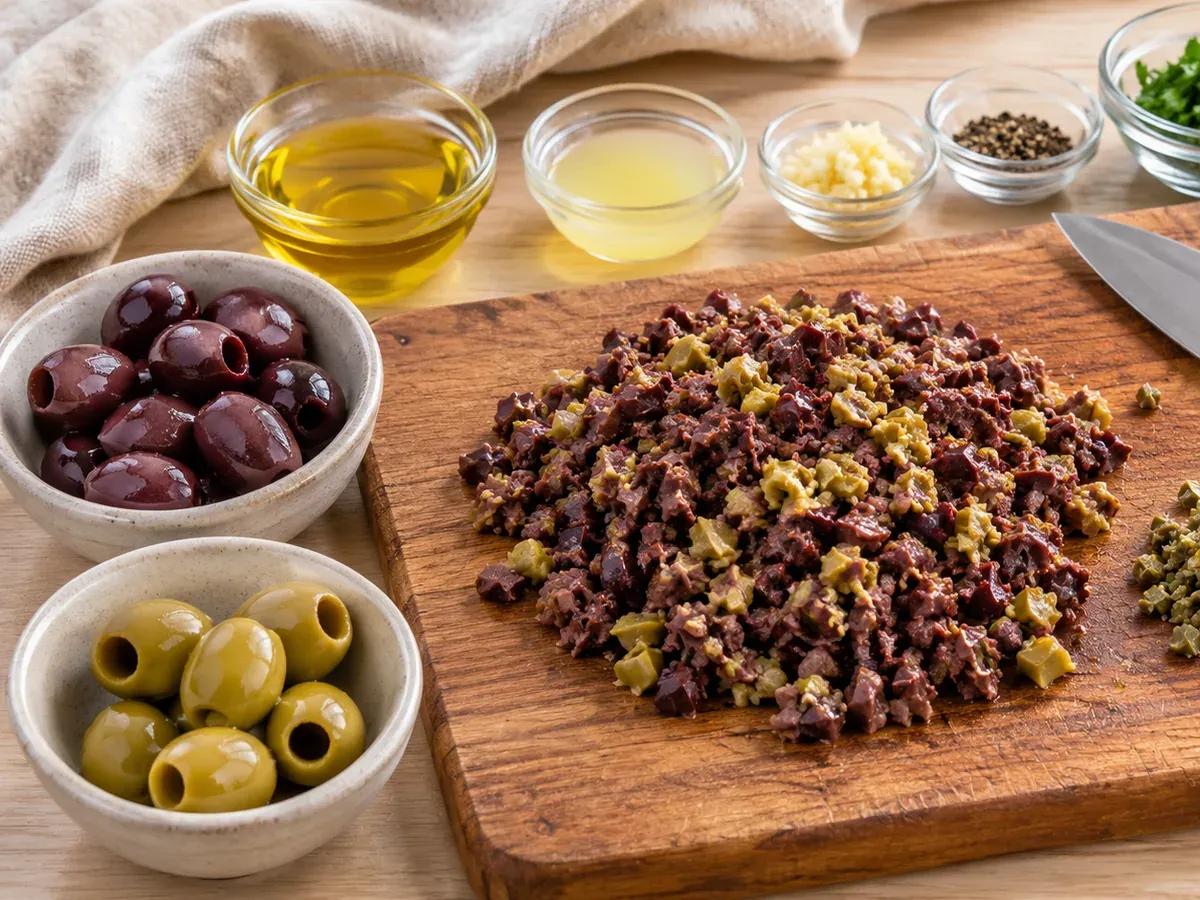
Pat the drained olives dry and check for stray pits. Finely chop both kinds of olives with a knife, leaving small, distinct pieces. Finely chop the rinsed, drained capers.
- 2
Mix the dressing
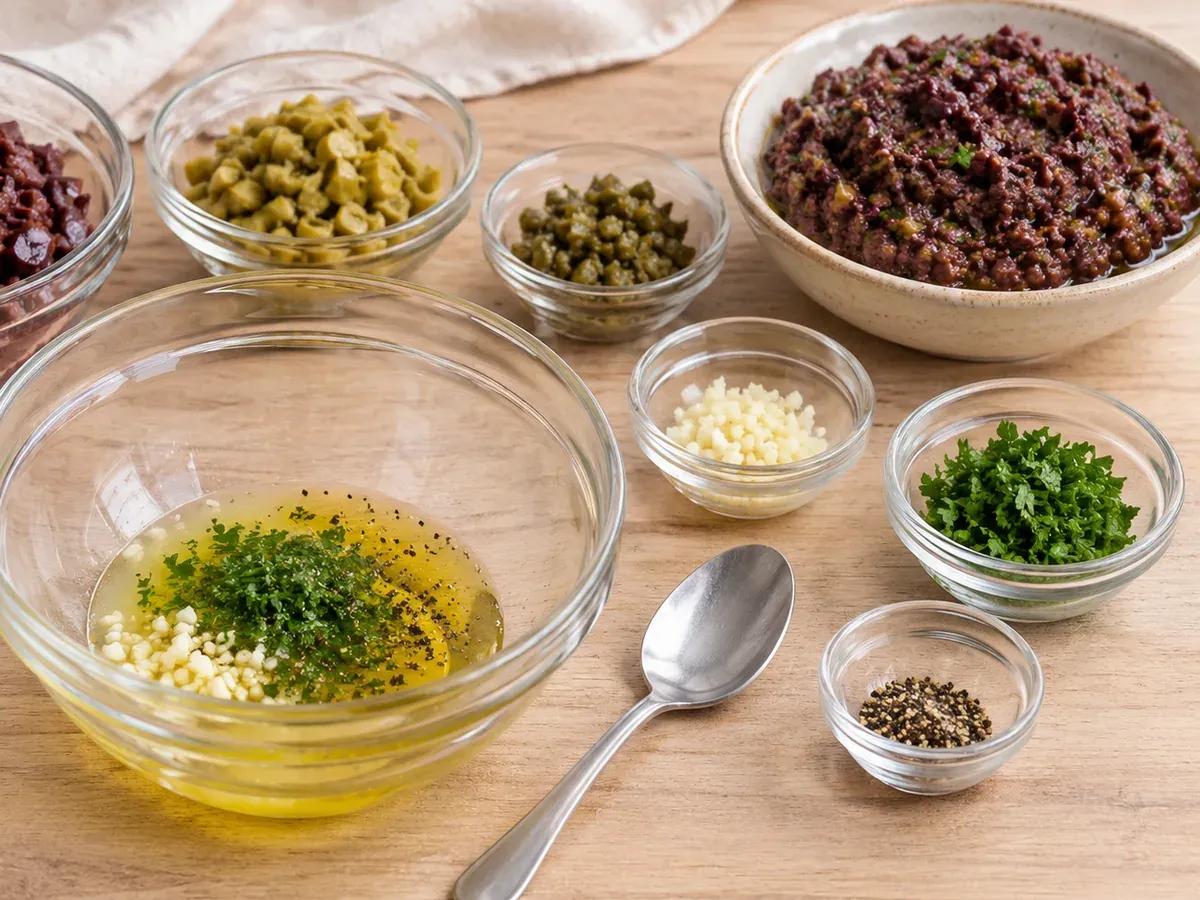
In a medium bowl, stir together the garlic, parsley, lemon juice, olive oil, and black pepper. The oil and lemon may remain slightly separate; they do not need to form a thick emulsion.
- 3
Stir and rest
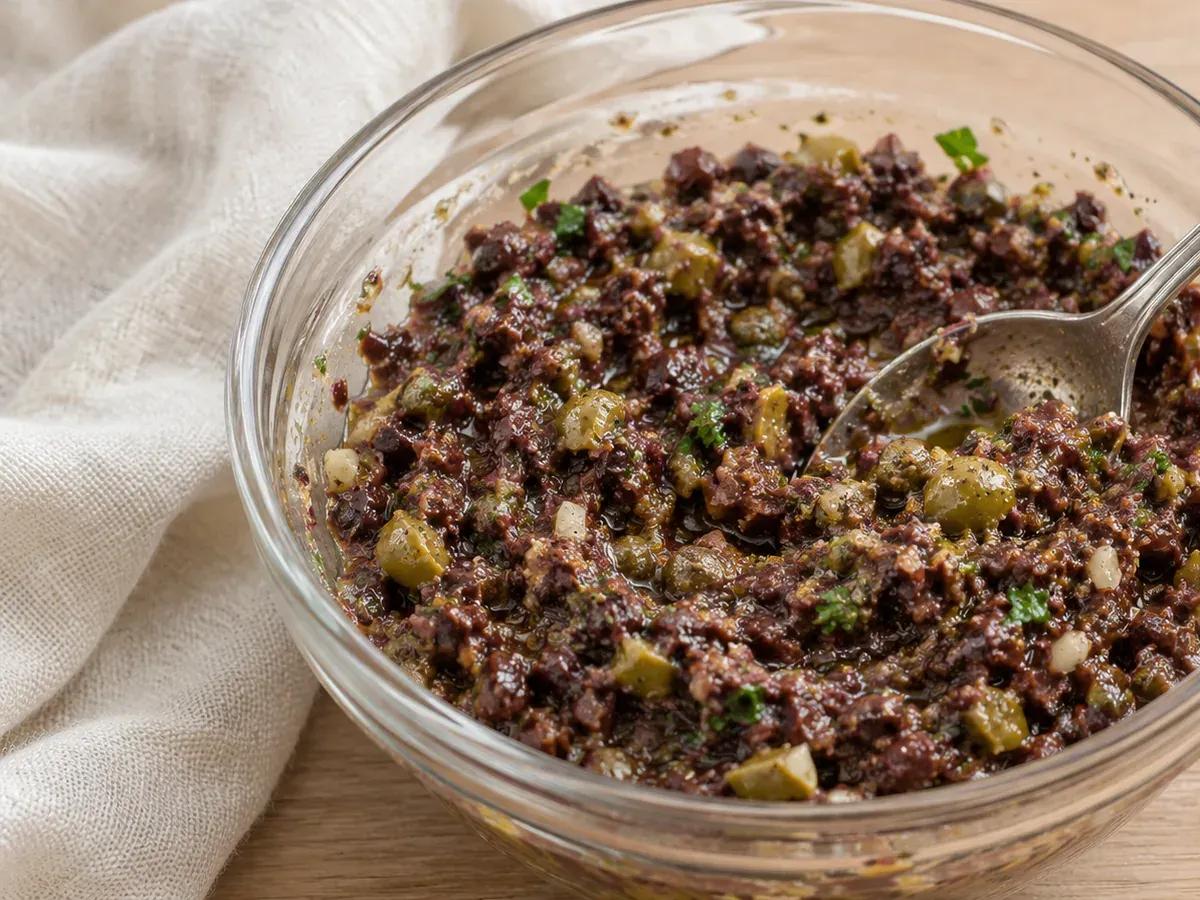
Fold the chopped olives and capers into the dressing until evenly coated. For a more cohesive spread, press a few spoonfuls against the bowl with a fork, then stir them back in. Rest for 10 minutes, stir again, and serve. Refrigerate unused tapenade promptly.
Tips
- →Drain and pat the olives dry before chopping. Extra brine can collect beneath the spread.
- →Chop the garlic very finely so one bite does not contain a large raw piece.
- →Keep chopping until the olives form small pieces that sit comfortably on a cracker. Stop before they become a puree.
- →Taste the finished mixture before changing anything. If it seems too salty, serve a smaller amount with unsalted bread rather than adding more capers or salt.
Variation
Use all Kalamata or all green olives if that is what you have; keep the total drained weight at 150 g. Choose plain pitted olives rather than stuffed olives so the filling does not change the flavor. Flat-leaf parsley can be replaced with the same amount of finely chopped curly parsley. For gentler garlic flavor, use half a small clove. This recipe is intentionally anchovy-free; the capers supply its extra savory, briny character.
Questions and answers
What is olive tapenade made of?
This olive tapenade contains Kalamata olives, green olives, capers, garlic, parsley, lemon juice, olive oil, and black pepper. It is a chunky spread rather than a pourable sauce.
Does olive tapenade need anchovies?
No. Some versions include anchovies, but this recipe leaves them out and uses capers for an extra savory bite, making it vegan.
Can I make olive tapenade without a food processor?
Yes. Finely chop the olives and capers with a chef's knife, then stir them into the dressing. Mash a little of the mixture with a fork if you want it to hold together more closely.
What olives are best for tapenade?
A mix of Kalamata and plain green olives gives this version both richness and brightness. Use olives you enjoy eating on their own, drain them well, and check for pit fragments even when the package says pitted.
How do I fix tapenade that is too dry?
Stir it thoroughly first so the oil coats all the pieces. If needed, add olive oil 1 teaspoon at a time until it spreads easily; avoid adding olive brine, which increases saltiness.
How long does homemade olive tapenade keep?
Refrigerate this raw-garlic-and-herb version promptly in a covered container at 40°F (4°C) or below and use within 4 days. Freeze extra portions for longer storage and thaw in the refrigerator.
Storage and reheating
Grilled cheese is best eaten right away. Refrigerate leftovers promptly in a covered, shallow container at 40°F (4°C) or below, within 2 hours of cooking—or within 1 hour when the temperature is above 90°F (32°C). Use within 3–4 days. Reheat to 165°F (74°C), checking the center with a food thermometer. A skillet over low heat, briefly covered and then uncovered, can warm the center and help restore the crust. If using previously cooked chicken or other leftovers, count storage time from when that ingredient was first cooked. See USDA leftovers guidance and FoodSafety.gov minimum temperatures.
Dietary note: This recipe is labeled vegan as written with the specified products.
Did you make it?
Rate this recipe to help other cooks.
More grilled cheese recipes
Planning an event? Explore hiring a Grilly Cheese food truck.