Hummus
Recipe by Steven Weitzman, founder & head chef of Grilly CheesePublished 2026-10-27Updated 2026-10-27
Hummus with canned chickpeas, tahini, lemon, and garlic. A short skillet simmer helps make a smooth dip for grilled cheese strips, fries, or vegetables.
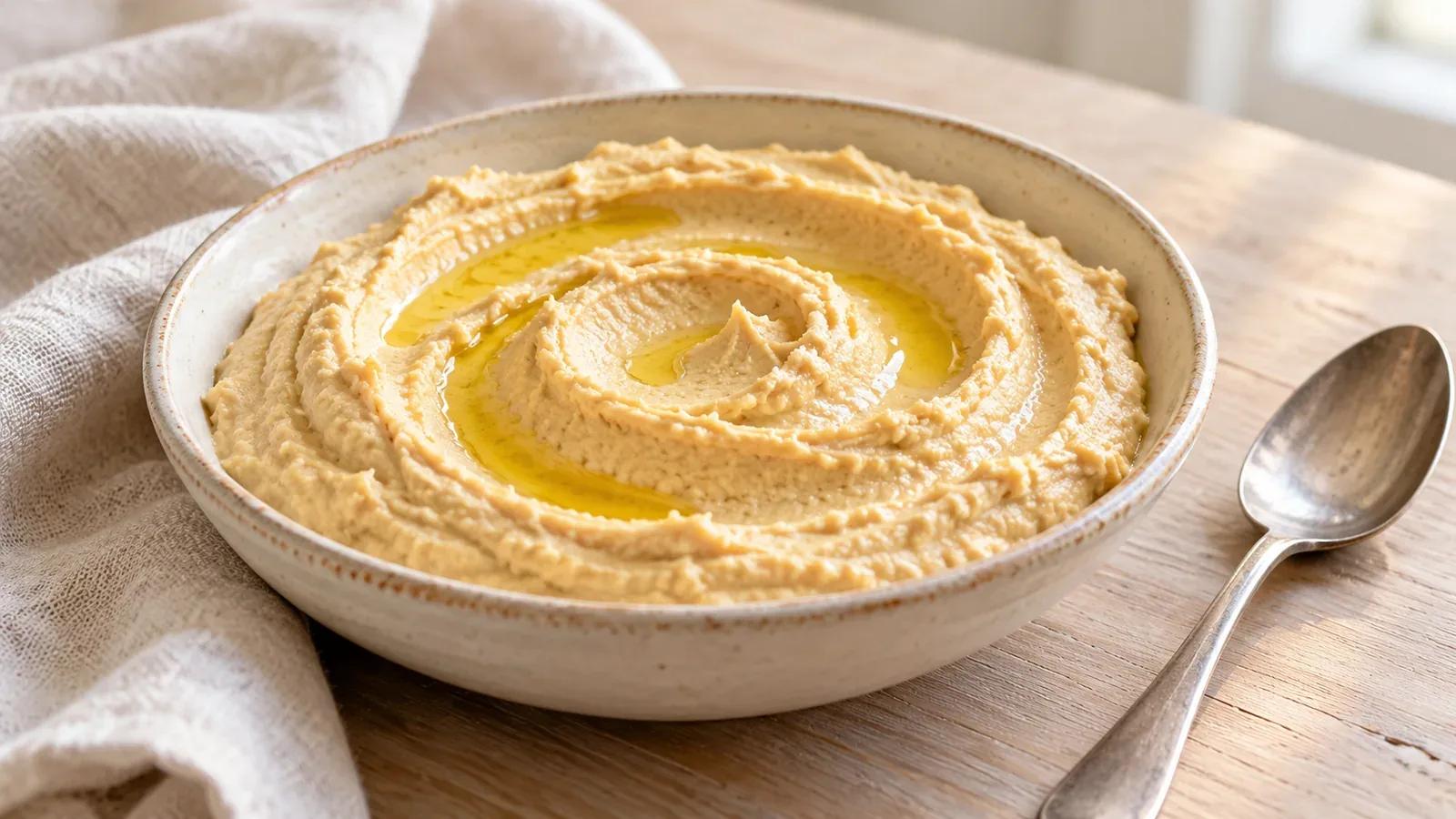
Hummus is a creamy chickpea-and-tahini dip flavored with lemon and garlic, offering a savory, gently tangy pairing for grilled cheese strips, fries, or crunchy vegetables. This version starts with canned chickpeas and gives them a short skillet simmer before blending. That extra softening step helps the food processor break them down without asking you to peel each chickpea. Whipping the tahini with lemon first builds a creamy base, and cold water lets you adjust the finished texture a spoonful at a time. Makes: about 1 3/4 cups, or 7 servings of about 1/4 cup. Prep and blending: 15 minutes. Cook: about 12 minutes. Cooling: 5 minutes. Total: about 32 minutes. Active work: about 22 minutes. Times are approximate; especially firm canned chickpeas may need a few extra minutes of simmering. The cooling time is included separately so you can complete each step in order.
How to make Hummus
Makes About 1 3/4 cups; 7 servings of about 1/4 cup. Listed times are estimates; visual and temperature cues control doneness.
15 minCook
12 minRest
0 minTotal
27 minYield
About 1 3/4 cups; 7 servings of about 1/4 cup
Equipment
- 10-inch skillet
- Small food processor, about 3–5 cups capacity
- Colander
- Measuring cups and spoons
- Small knife or fine grater
- Silicone spatula
- Spoon
- Shallow serving bowl
Ingredients
- •1 can (15 ounces / 425 g) chickpeas, drained and rinsed; about 1 1/2 cups drained
- •Water to cover the chickpeas by 1/2 inch for simmering, discarded after cooking
- •1/4 cup (60 g) well-stirred tahini
- •2 tablespoons fresh lemon juice, plus more to taste
- •1 small garlic clove, finely grated or minced
- •1/4 teaspoon ground cumin
- •1/4 teaspoon fine salt, plus more to taste
- •1 tablespoon olive oil, plus 1 teaspoon for serving
- •3–5 tablespoons cold water for blending, added gradually
Instructions
- 1
Soften and drain the chickpeas
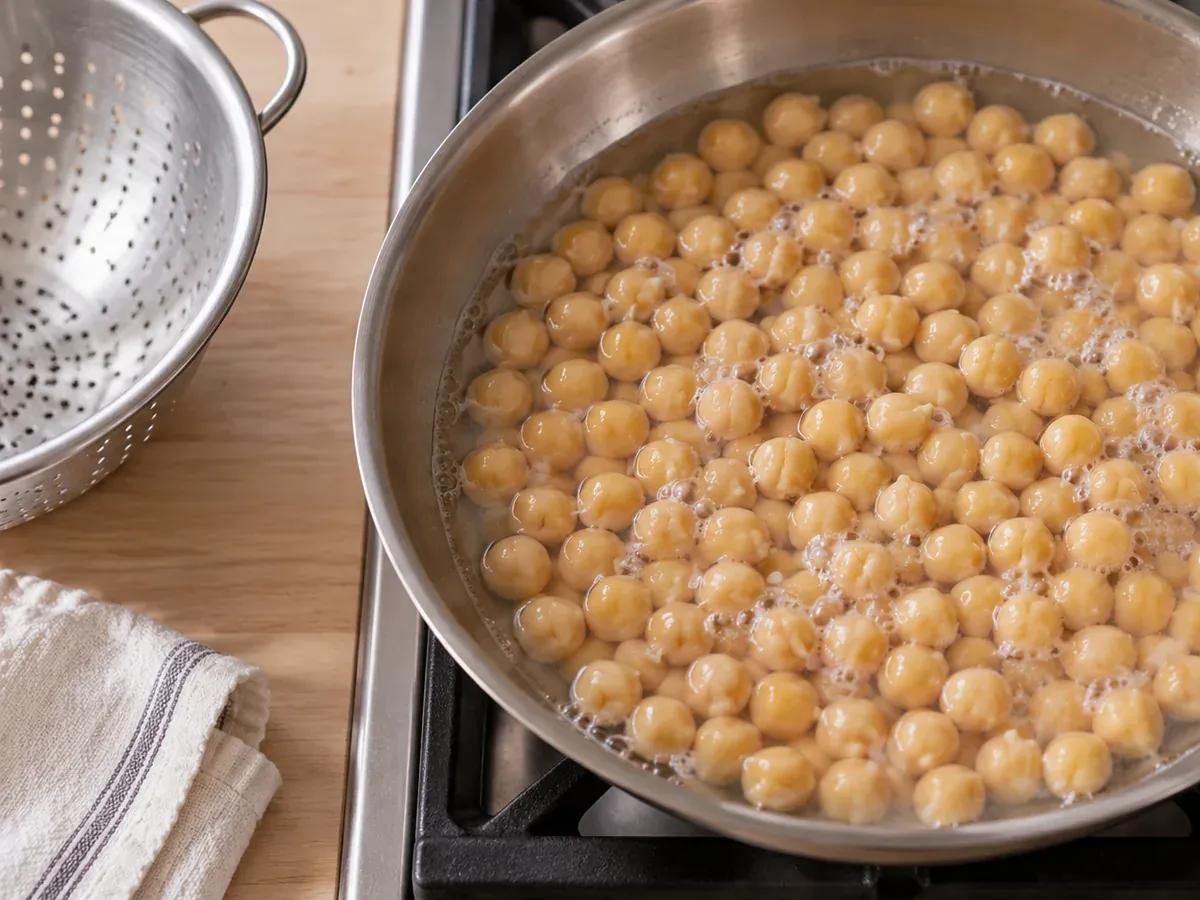
Place the drained, rinsed chickpeas in a 10-inch skillet and add water to cover by about 1/2 inch. Bring to a simmer over medium-high heat, about 4 minutes. Reduce to medium-low and simmer for 8 minutes, until a chickpea crushes easily with the back of a spoon. Drain in a colander, discard the cooking water, and let the chickpeas cool for 5 minutes, until warm rather than steaming. They do not need to be peeled.
- 2
Whip the tahini and lemon
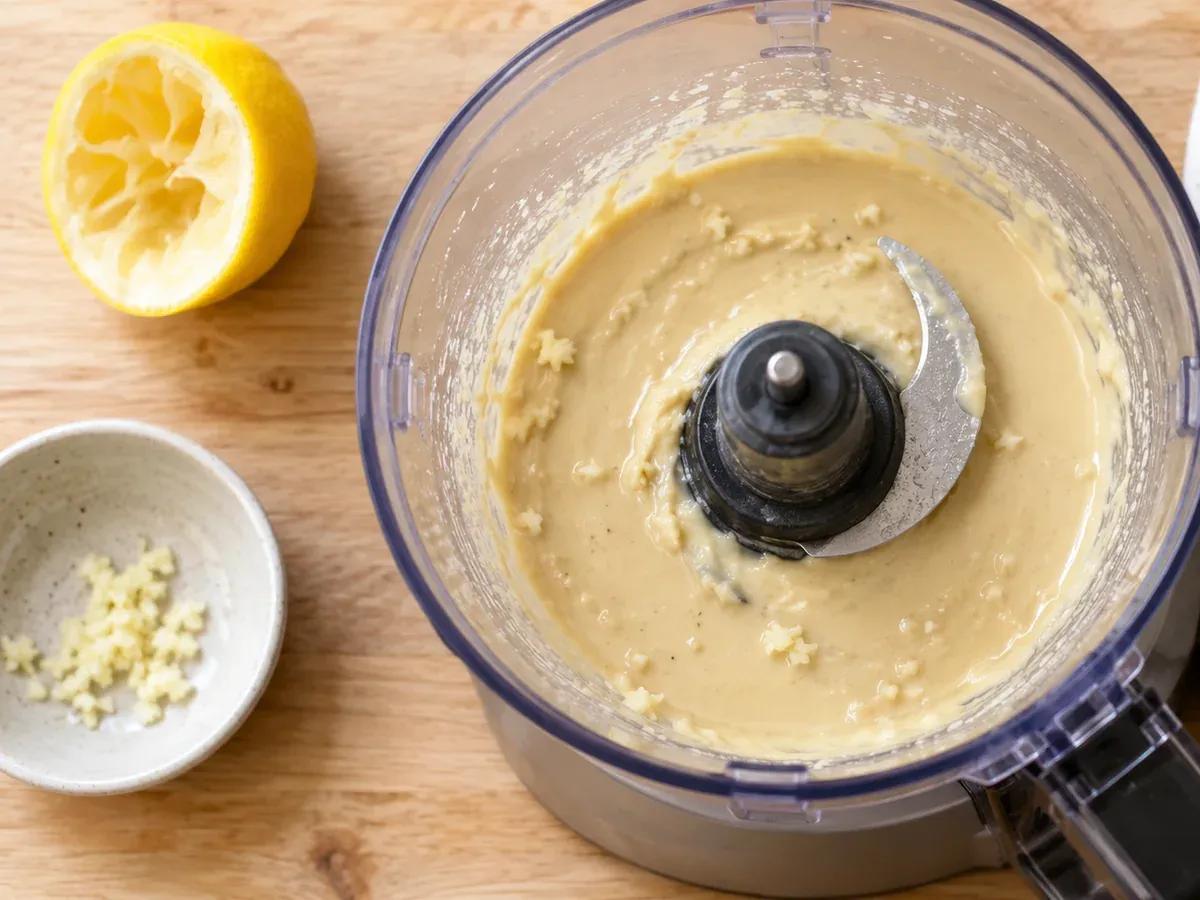
Once the chickpeas have cooled, place the tahini, 2 tablespoons lemon juice, and garlic in a small food processor, about 3–5 cups capacity. Process for 1 minute, stop the motor, and scrape down the bowl with a spatula. Process for another 30 seconds, until the mixture is pale and creamy. It may thicken before it smooths out; that is normal.
- 3
Blend and adjust the hummus
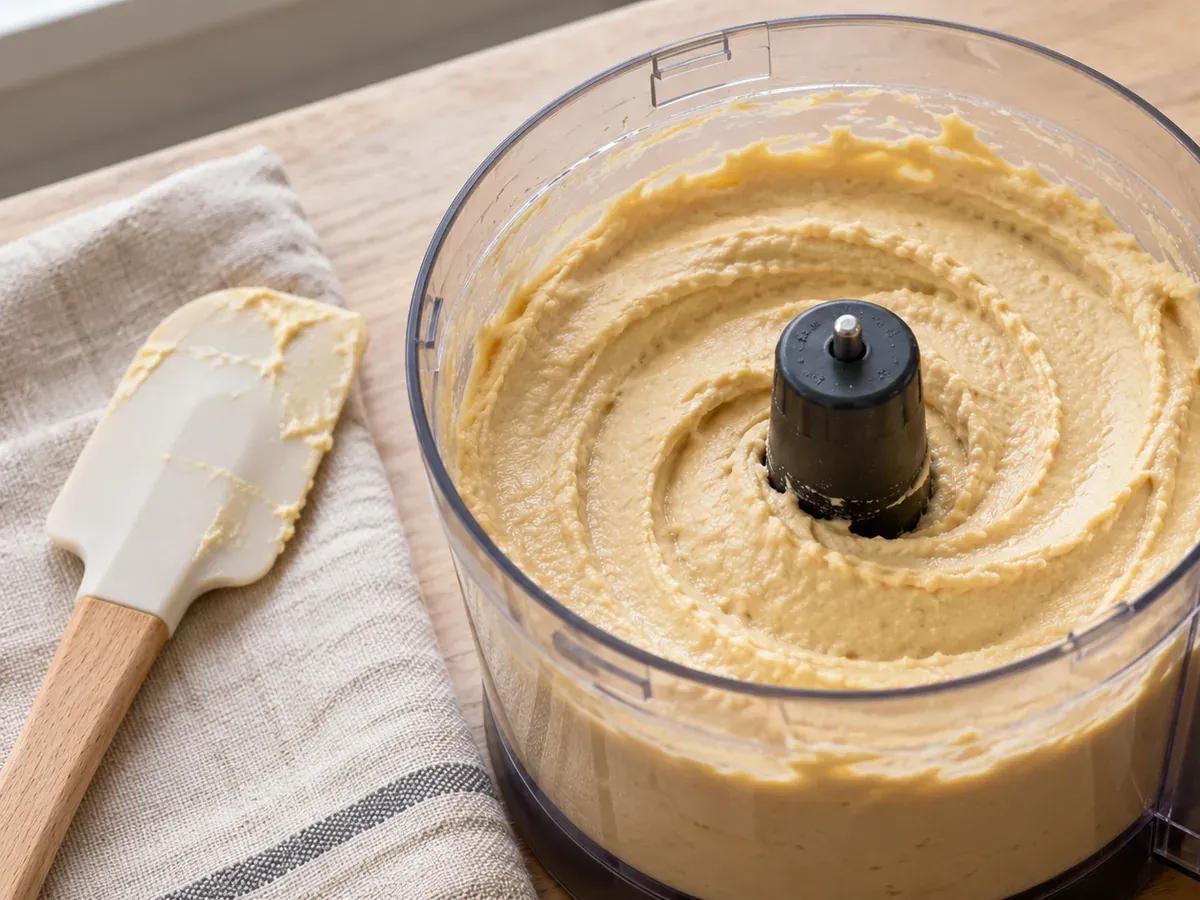
Add the warm drained chickpeas, cumin, salt, 1 tablespoon olive oil, and 3 tablespoons cold water. Process for 2 minutes, stopping the motor to scrape down the bowl once or twice. Add the remaining cold water 1 tablespoon at a time only as needed, then process for another 1–2 minutes, until smooth and easily scooped. Taste and adjust the lemon juice and salt. Spoon into a shallow bowl, make a few swirls with the back of a spoon, and drizzle with the remaining teaspoon olive oil. Serve slightly warm or cool; refrigerate promptly if saving it.
Tips
- →Test a chickpea before draining: it should flatten easily with gentle pressure from a spoon. If it still feels firm, simmer a few minutes longer.
- →Let the chickpeas stop steaming before adding them to the processor, and follow the appliance's instructions about warm foods.
- →Scrape down the sides only with the motor stopped. Small bits above the blade otherwise stay coarse while the rest becomes smooth.
- →Use a small processor for this batch. A large processor may need a doubled batch for the blades to catch the mixture; doubling changes the yield and may extend the work.
- →Stop adding water when the dip scoops easily and holds soft swirls. It thickens somewhat after refrigeration.
Variation
Chickpeas: Substitute about 1 1/2 cups home-cooked chickpeas that are already fully tender. Cooking dried chickpeas is a separate, longer preparation and is not included in the timing. Garlic: Use half the small clove for a gentler flavor, or omit it. Keep the lemon and cumin for seasoning. Tahini: Tahini supplies the sesame flavor and much of the creamy texture. For a sesame-free variation, use an equal amount of unsweetened sunflower seed butter and check all labels; the resulting dip will taste different from this hummus. Equipment: A suitable blender can work if it is designed for thick mixtures, but it may need more water and produce a looser dip. Do not force a blender that is struggling to move the mixture.
Questions and answers
Can you make hummus with canned chickpeas?
Yes. Drain and rinse them, then simmer briefly until very soft before blending. Canned chickpeas are already cooked; this extra step improves their blending texture.
Do you need to peel chickpeas for smooth hummus?
No. For this recipe, soften the canned chickpeas and process thoroughly, scraping the bowl as needed. Peeling can make an even silkier dip but adds work and is not required here.
Why is my hummus grainy?
The chickpeas may be too firm, the mixture may be too dry, or it may need longer processing. Scrape the bowl and blend a little longer, adding cold water 1 tablespoon at a time if necessary.
Can you make hummus without tahini?
You can make a chickpea dip without tahini, but its flavor and texture will differ. For this recipe's sesame flavor and creamy consistency, use the measured tahini; unsweetened sunflower seed butter is an alternative when sesame must be avoided.
What can you dip in hummus besides pita?
Try grilled cheese strips, skillet fries, cucumber, carrot sticks, or bell pepper strips. Keep the dip in a separate bowl and dip the sandwich just before each bite so the bread stays crisp.
How do you thin hummus after refrigerating it?
Stir in cold water a teaspoon at a time until it is easy to scoop. Taste again before adding lemon or salt, because loosening the texture may be all it needs.
Storage and reheating
Grilled cheese is best eaten right away. Refrigerate leftovers promptly in a covered, shallow container at 40°F (4°C) or below, within 2 hours of cooking—or within 1 hour when the temperature is above 90°F (32°C). Use within 3–4 days. Reheat to 165°F (74°C), checking the center with a food thermometer. A skillet over low heat, briefly covered and then uncovered, can warm the center and help restore the crust. If using previously cooked chicken or other leftovers, count storage time from when that ingredient was first cooked. See USDA leftovers guidance and FoodSafety.gov minimum temperatures.
Dietary note: This recipe is labeled vegan as written with the specified products.
Did you make it?
Rate this recipe to help other cooks.
More grilled cheese recipes
Planning an event? Explore hiring a Grilly Cheese food truck.