Cauliflower Soup
Recipe by Steven Weitzman, founder & head chef of Grilly CheesePublished 2026-10-27Updated 2026-10-27
Cauliflower soup with tender florets, onion, broth, and milk. A smooth skillet soup with about 25 minutes of active work that pairs with grilled cheese.

Cauliflower soup is a smooth blend of tender cauliflower, onion, broth, and milk that gives a crisp grilled cheese sandwich a mild, creamy dipping partner. This version uses the cauliflower itself for body, with a little butter for the onion and whole milk stirred in after blending. A teaspoon of Dijon rounds out the flavor without making the soup taste strongly of mustard. You need a deep skillet and an immersion blender with a heatproof blending jug. Makes: about 5 cups, or 4 side servings. Prep: 12 minutes. Cook and blend: about 35 minutes. Total: 47 minutes, with about 25 minutes of active work. The covered simmer accounts for most of the remaining time.
How to make Cauliflower Soup
Makes About 5 cups; 4 side-dish servings. Listed times are estimates; visual and temperature cues control doneness.
12 minCook
35 minRest
0 minTotal
47 minYield
About 5 cups; 4 side-dish servings
Equipment
- Cutting board and sharp knife
- Measuring cups and spoons
- Deep 4-quart saute skillet with lid
- Wooden spoon
- Ladle
- Deep heatproof blending jug
- Immersion blender
- Trivet
Ingredients
- •1 tablespoon unsalted butter
- •1 small yellow onion, diced, about 1 cup (140 g)
- •1 garlic clove, minced
- •1 pound (450 g) trimmed cauliflower florets, cut into roughly 1-inch pieces: Weigh after removing the leaves and tough core. Buy a head large enough to give this trimmed weight, or use a bag of fresh florets.
- •2 cups (480 ml) low-sodium vegetable broth: A mild, pale broth keeps the cauliflower flavor prominent.
- •1/2 teaspoon fine salt
- •1/8 teaspoon ground black pepper
- •1 cup (240 ml) whole milk
- •1 teaspoon Dijon mustard
Instructions
- 1
Soften the onion
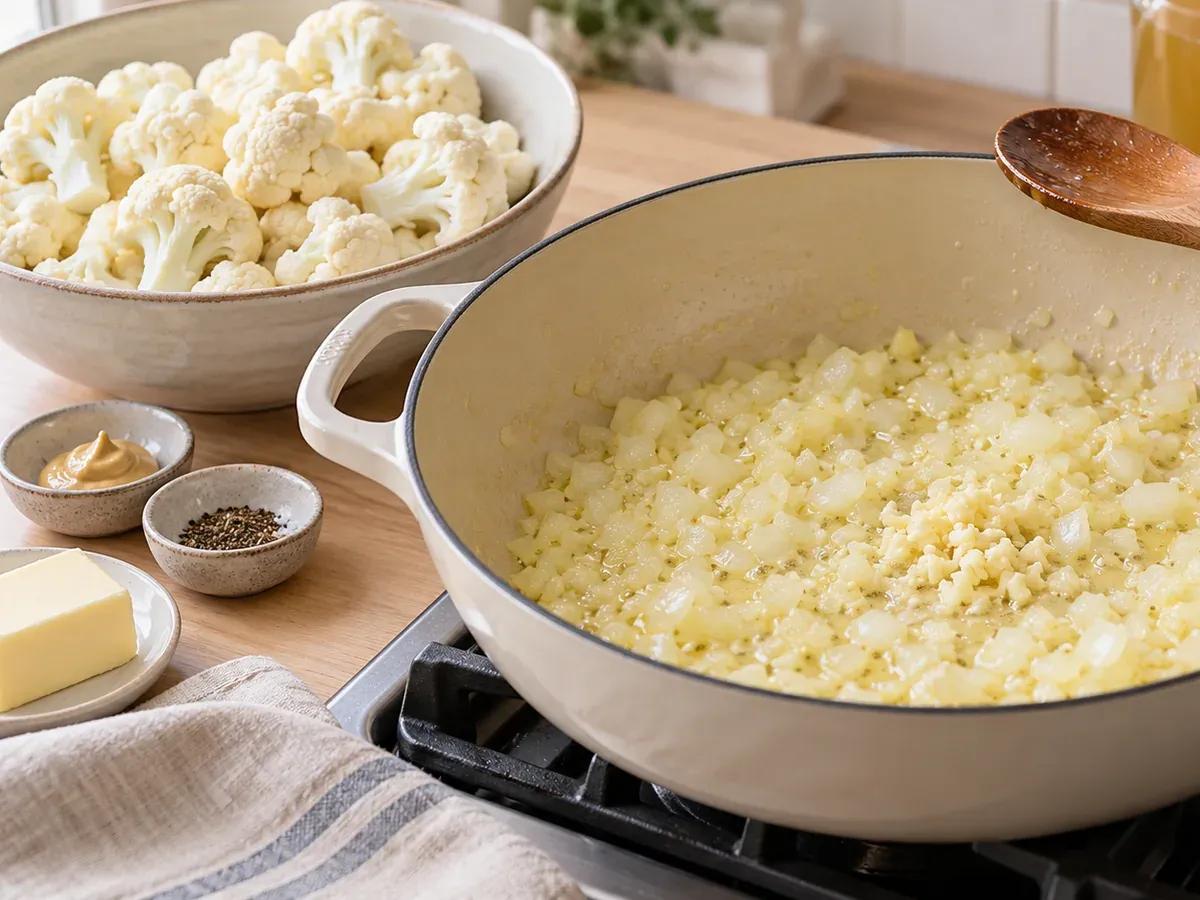
Melt the butter in a deep 4-quart saute skillet over medium heat. Add the onion and cook for 5–6 minutes, stirring, until soft and translucent. Add the garlic and stir for 30 seconds, keeping both onion and garlic from browning.
- 2
Simmer the cauliflower
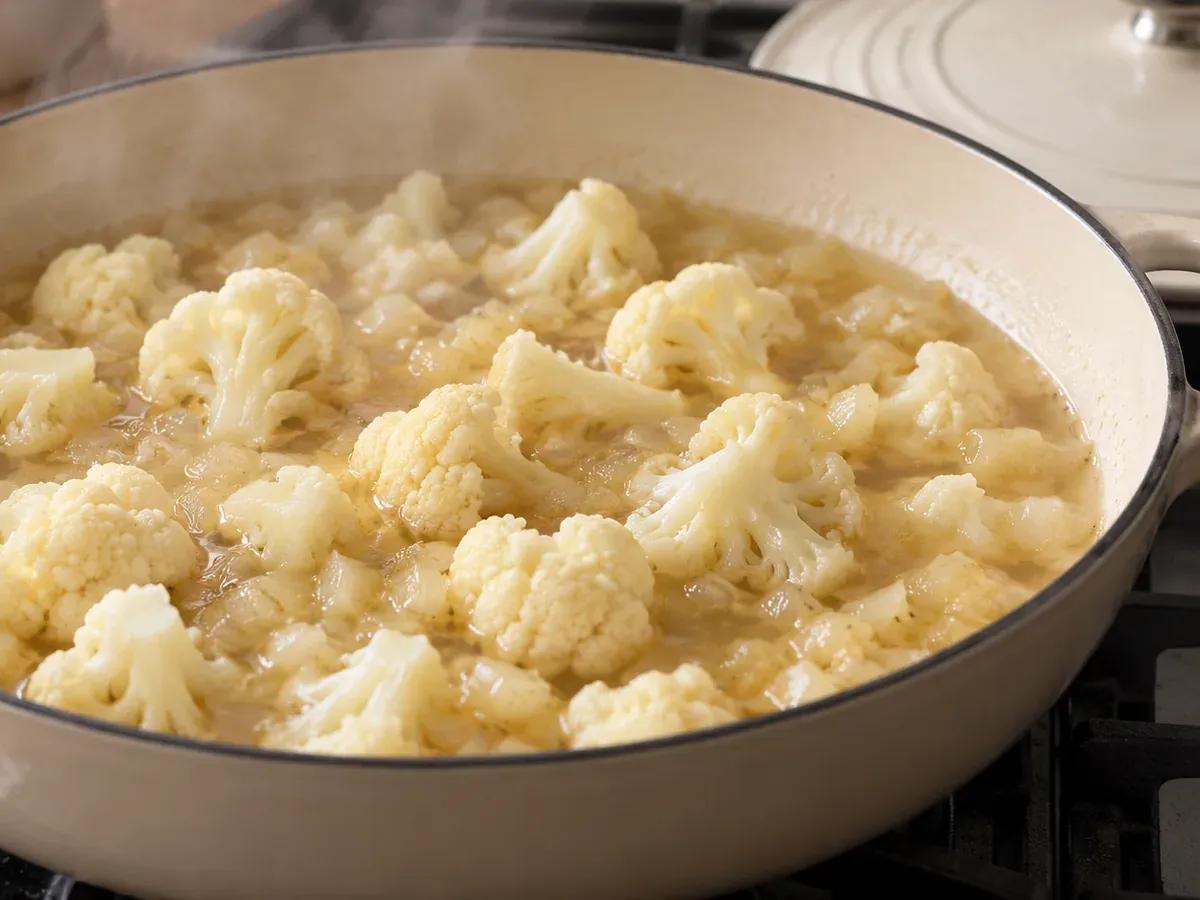
Add the cauliflower, vegetable broth, salt, and pepper. Bring to a gentle boil, then reduce the heat, cover, and simmer for 15–18 minutes, stirring once or twice, until the florets crush easily with a spoon. The broth need not cover every floret; the covered pan also steams them. Continue a few minutes longer if the stems are still firm.
- 3
Blend and finish with milk
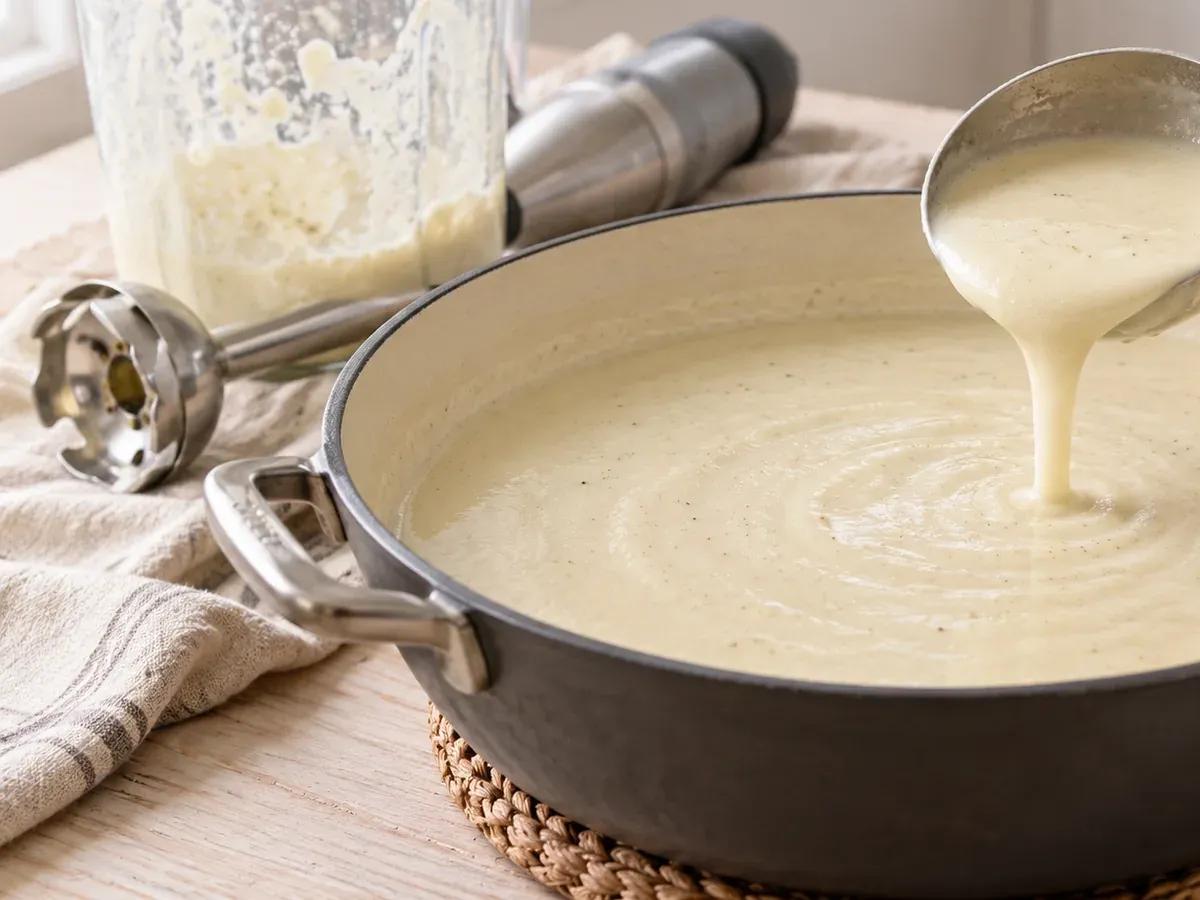
Remove the skillet from the heat and set it on a trivet. Ladle the cauliflower and broth into a deep heatproof blending jug in batches, filling it no more than halfway. Submerge the immersion blender head fully before switching it on and blend until smooth; switch it off before lifting it out. Return the puree to the skillet and stir in the milk and Dijon. Warm over low heat for 2–3 minutes, stirring, until hot, without a vigorous boil. Serve hot. Allow about 35 minutes for cooking and blending.
Tips
- →Use the trimmed floret weight so the broth-to-cauliflower ratio stays consistent.
- →Cut any thick stem sections into smaller pieces so they soften with the florets.
- →Test a stem before blending. It should crush easily rather than resist the spoon.
- →Use a deep skillet with at least a 4-quart capacity. A shallow frying pan is awkward for this volume.
- →Blend in a deep jug so the blender head stays submerged and hot soup does not splash from a shallow pan.
- →Use low heat after adding milk and stir along the bottom.
- →Taste before adding extra salt, especially if using regular broth.
Variation
Frozen cauliflower: Use 1 pound plain frozen florets directly from frozen. Simmer until very tender; bringing the pan back to a simmer may take longer, so allow extra time. Lower-fat milk: Use the same volume of 2% milk for a slightly lighter texture. Whole milk gives the fullest finish. Dairy-free version: Replace the butter with 1 tablespoon olive oil and the milk with 1 cup plain, unsweetened oat milk. Check that the broth and Dijon meet your dietary needs; the flavor and texture will differ. Chicken broth: Substitute in the same volume if a vegetarian soup is not required. Countertop blender: Use only one whose manufacturer permits hot liquids. Cool and vent the soup according to its hot-liquid instructions and blend in small batches, then return to the skillet. Do not use a sealed personal blender for hot soup.
Questions and answers
How do you make cauliflower soup creamy?
Cook the florets until they crush easily, then blend them thoroughly with the broth. Whole milk stirred in afterward gives this recipe a smooth, creamy finish.
Can I use frozen cauliflower for soup?
Yes. Use plain frozen florets in the same weight and simmer until very tender. Allow a little extra time for the liquid to return to a simmer.
Do you need cream for cauliflower soup?
No. This recipe uses whole milk and blended cauliflower for body. It contains no heavy cream or flour.
Why is my cauliflower soup grainy?
The cauliflower may still be too firm, or the puree may need more blending. Make sure the stem pieces are very tender and blend in small, manageable batches.
How do I make cauliflower soup thicker?
First blend it thoroughly, since intact pieces can leave the broth looking thin. If it is still too loose, simmer gently uncovered while stirring; if too thick, add a little warm broth or milk.
Can you make cauliflower soup ahead?
Yes. Refrigerate promptly in shallow covered containers and use within 3–4 days. Reheat gently, stirring often, and adjust the thickness with a splash of liquid if needed.
Storage and reheating
Grilled cheese is best eaten right away. Refrigerate leftovers promptly in a covered, shallow container at 40°F (4°C) or below, within 2 hours of cooking—or within 1 hour when the temperature is above 90°F (32°C). Use within 3–4 days. Reheat to 165°F (74°C), checking the center with a food thermometer. A skillet over low heat, briefly covered and then uncovered, can warm the center and help restore the crust. If using previously cooked chicken or other leftovers, count storage time from when that ingredient was first cooked. See USDA leftovers guidance and FoodSafety.gov minimum temperatures.
Dietary note: This recipe is labeled VegetarianDiet.
Did you make it?
Rate this recipe to help other cooks.
More grilled cheese recipes
Planning an event? Explore hiring a Grilly Cheese food truck.