How to Plan a Food Truck Menu for an Event Without Slowing Down the Line
More menu choices don't automatically make a better food truck event. Learn how to build a menu with enough variety for guests without sacrificing service speed or making ordering unnecessarily complicated.
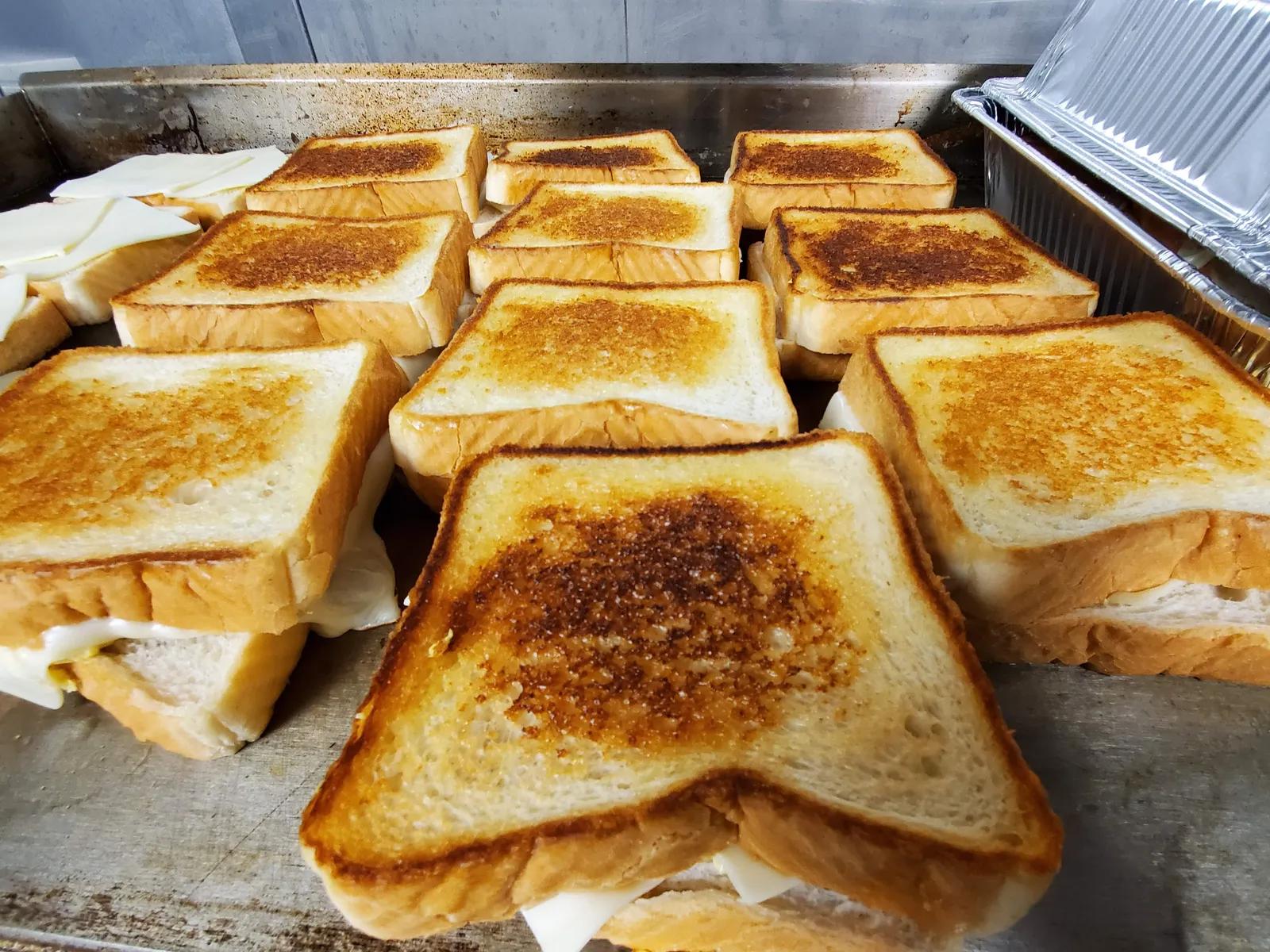
For most hosted food truck events, start with a focused selection of mains that covers genuinely different preferences, then add the dietary accommodations, sides and drinks the event actually needs.
- Guest count and service window
- Event type and arrival pattern
- Whether meals are prepaid
- Kitchen layout and preparation time
- Dietary requirements and customization
When people hire a food truck for an event, there's an understandable temptation to offer guests as many choices as possible.
If the truck has 18 things on its regular menu, why not offer all 18?
Because an event isn't always the same operating environment as a normal food truck stop.
At a public lunch stop, customers arrive gradually. At an event, 100 people may decide they're hungry at almost exactly the same time.
That changes what makes a good menu.
The best food truck event menu isn't necessarily the one with the most choices. It's the one that gives the guests enough meaningful choices while allowing the kitchen and ordering process to keep moving.
Here's how to build one.
The Short Answer
For most hosted food truck events, start with a focused selection of mains that covers genuinely different preferences, then add the dietary accommodations, sides and drinks the event actually needs.
There is no universal perfect number of menu items.
The right menu depends on:
- Guest count
- Service window
- Type of event
- How guests arrive
- Whether meals are prepaid or purchased individually
- Kitchen layout
- Preparation time
- Amount of customization
- Dietary requirements
- The food truck's production system
The goal isn't to create the smallest possible menu.
It's to remove choices that add complexity without adding much value.
Build Variety Through Meaningful Differences

One common menu-planning mistake is adding items simply to increase the number of choices.
Instead, create contrast.
If you already have a rich, cheesy, bacon-heavy item, another rich, cheesy, bacon-heavy item may not expand the menu much.
A different option might.
Think about differences in:
- Protein
- Flavor profile
- Spice level
- Richness
- Familiarity
- Dietary compatibility
- Portion
- Texture
You don't need every category represented.
The point is to avoid spending valuable menu space on several options that compete for exactly the same guest.
This is especially useful when narrowing a large restaurant-style menu for a high-volume event.
Ask the operator:
If we remove three items, which ones would guests miss the least?
A truck that serves events regularly will usually have a good answer.
Handling Vegetarian, Vegan and Gluten-Free Guests
Dietary accommodations deserve planning, but they don't necessarily require doubling the size of the menu.
First, get actual information whenever possible.
Instead of telling the truck:
We might have some dietary restrictions.
Try:
We currently have six vegetarian guests, two vegan guests and four guests requesting gluten-free options.
That allows the operator to plan inventory and service much more intelligently.
Vegetarian
For many food-truck concepts, vegetarian options can simply be part of the normal menu rather than treated as a special request.
That's ideal.
The guest sees a real menu choice rather than an afterthought.
Vegan
Ask the operator what it can realistically prepare with its equipment and ingredients.
Also ask whether advance counts are useful.
If only a handful of guests require a particular vegan component, the truck may need to bring an event-specific quantity.
Gluten-Free
"Gluten-free option" and "safe for someone with celiac disease" are not automatically the same claim.
Cross-contact can occur in small mobile kitchens where surfaces, fryers, utensils or cooking equipment are shared.
If a guest has a medically significant allergy or condition, communicate that clearly and let the vendor explain what it can and cannot safely accommodate.
Do not make assumptions based solely on ingredients.
Allergies
For serious allergies, the useful question isn't:
Can you leave the ingredient off?
It's:
Can you safely accommodate this allergy in your kitchen environment?
Those are different questions.
A professional operator should be able to explain its limitations without guessing.
Customization: Where to Draw the Line
Customization is one of the appealing parts of ordering from a food truck.
It can also become difficult at scale.
There's a major difference between:
No tomatoes, please.
and:
Can I take this sandwich, replace the cheese, add ingredients from two other sandwiches, put the sauce on the side, add something that's not on this item and change the side?
At a normal lunch stop, the truck may happily accommodate that.
At a tightly scheduled event with 250 people, extensive modifications can affect everyone behind that order.
Hosts don't necessarily need to prohibit customization.
Instead, establish what kind makes sense.
For example:
- Allow simple omissions
- Allow clearly defined add-ons
- Pre-plan dietary substitutions
- Avoid unlimited build-your-own combinations during peak service
- Keep special-event modifications consistent
The food truck should tell you what works for its kitchen.
Sides, Drinks and Desserts
Mains get most of the attention, but the rest of the menu affects service too.
Sides
A single included side is operationally simple.
Offering six side choices creates six more decisions at the ordering window.
That may be worthwhile at a small party.
At a large employee lunch, perhaps not.
Again, the issue isn't that choices are bad.
It's whether the choices improve the guest experience enough to justify the additional complexity.
Drinks
Bottled and canned beverages are particularly easy because they don't require preparation.
For a hosted event, placing beverages at a separate pickup point can sometimes keep guests from lingering at the service window.
Whether that setup is practical depends on the event and vendor.
Desserts
Dessert can work several ways:
- Included with the meal
- Served later
- Provided by the same truck
- Supplied by another vendor
- Placed at a separate station
If dessert requires another made-to-order process, think about when guests will request it.
You don't necessarily want the dessert rush competing with the lunch rush at the same service window.
A Simple Food Truck Menu Planning Framework

If you want a straightforward way to build the menu, use this sequence.
Step 1: Define the meal
Is this breakfast, lunch, dinner, dessert or late-night food?
Step 2: Define the audience
Adults, children, employees, wedding guests, students, general public or a mix?
Step 3: Define the time pressure
Do 100 people have 45 minutes, or do they have three hours?
Step 4: Identify real dietary needs
Collect counts when practical.
Step 5: Choose meaningfully different mains
Prioritize actual variety rather than several tiny variations.
Step 6: Decide how much customization makes sense
Keep it appropriate to the event's volume.
Step 7: Add sides and drinks deliberately
Don't create extra decisions simply because you can.
Step 8: Ask the operator to pressure-test the menu
This is the most important step.
Tell the truck:
- Guest count
- Service window
- Arrival pattern
- Event type
- Payment method
- Proposed menu
Then ask:
Would you change anything?
A vendor that serves events regularly should be able to identify potential bottlenecks before they become actual lines.
Frequently Asked Questions
How many menu items should a food truck offer at an event?
There is no universal ideal number. The menu should provide meaningful variety while remaining practical for the truck's kitchen, guest count and service window. Ask the operator which items it recommends for your event rather than choosing an arbitrary number.
Should a food truck offer its full menu at a private event?
Sometimes. Smaller events with longer service windows may work perfectly well with the regular menu. Larger or tightly scheduled events may benefit from a focused selection. The operator should recommend the format based on expected volume.
Does a smaller food truck menu make service faster?
It can, but not automatically. Speed depends on the truck's kitchen design, ingredients, equipment and ordering process. A large menu built from shared ingredients may be efficient, while a smaller menu containing complicated items may not be. Ask the specific vendor.
How should I handle vegetarian guests?
Include at least one genuinely appealing vegetarian choice where practical rather than treating vegetarian meals as an afterthought. Give the vendor estimated dietary counts before the event.
Can food trucks accommodate vegan and gluten-free guests?
Many can, but capabilities vary. Ask the vendor specifically what it can provide and whether advance counts are required. For medically significant allergies or celiac disease, also discuss cross-contact rather than assuming an ingredient substitution makes an item safe.
Should guests choose their food before the event?
Pre-selection isn't necessary for every event. However, sharing the menu in advance can help guests decide before reaching the service window. For some tightly scheduled or very large events, pre-ordering may also be useful if the vendor supports it.
Is a full food truck menu better for weddings?
Not necessarily. It depends on the truck's role. A primary wedding meal may justify broader selection, while a late-night truck can often use a smaller menu of signature favorites because guests have already eaten dinner.
Should drinks and sides be ordered at the same window?
That depends on the truck and event setup. For high-volume hosted events, separating simple grab-and-go items such as bottled beverages can sometimes reduce activity at the ordering window. Let the vendor recommend the most efficient setup.
The Bottom Line
A good food truck event menu doesn't feel limited.
It feels easy.
Guests can look at it and quickly find something they actually want. People with dietary needs know what they can order. The kitchen can execute the choices consistently. And the person at the window doesn't need five minutes to explain how everything works.
That's the balance.
Don't measure the quality of an event menu by how many lines of text it contains.
Measure it by whether guests have meaningful choices and the truck can actually serve those choices well under the conditions of your event.
Planning a food truck event?
Share your date, location, guest count, and service details to start a practical conversation about your event.
Request a QuoteMore Event Planning Resources
How to Book a Food Truck
A practical guide to booking the right vendor.
Event Planning Guide
Coordinate timing, setup, and guest flow.
Catering vs Vending
Choose the service format that fits your event.
Food Truck Cost Guide
Understand the factors that shape an event quote.
Corporate Event Guide
Plan a menu around employee schedules.
Graduation Party Guide
Build a practical menu for a celebration.
Grilly Cheese Food Truck Menu
Every grilled cheese sandwich, hot dog, side and dessert we serve at events.