“Behind the Burner”: The Micro‑Engineering of a Food Truck Kitchen
Most guests see a food truck as a window and a menu board. Behind that window is a tiny, micro‑engineered kitchen that has to do the work of a full restaurant line in a footprint smaller than many home garages. Food truck kitchen design is the reason your wedding line moves quickly, your corporate team eats on schedule, and your private party feels smooth instead of chaotic.
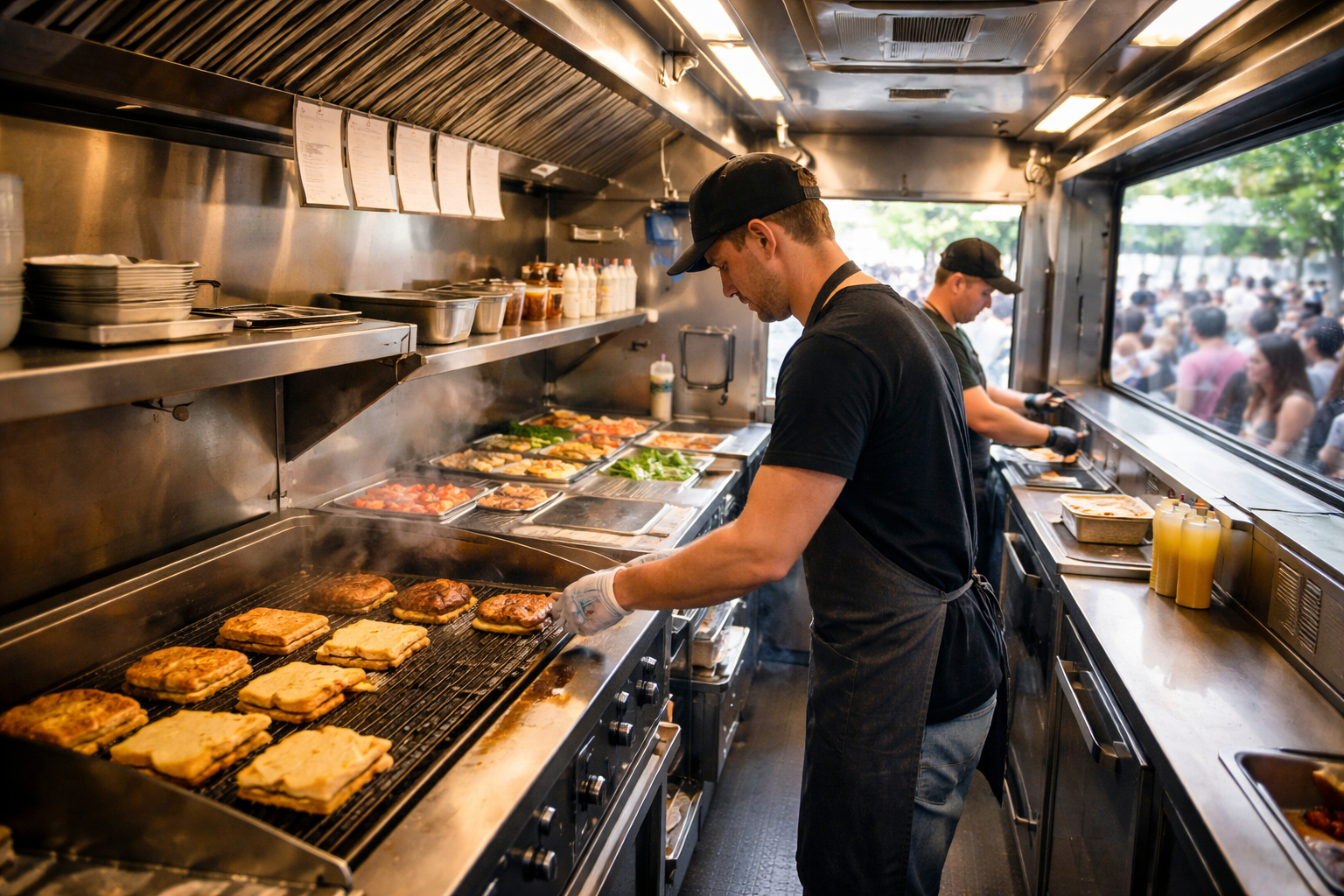
A great food truck kitchen is less about gadgets and more about micro-engineering: every burner, fridge, and cutting board has a specific job and a specific place in the workflow. When the layout, airflow, and prep stations are aligned, a small crew can produce a high volume of consistent food, on time, in a very small space.
- Equipment is arranged in a line that follows how each sandwich or dish is built from start to finish.
- Hot and cold zones are carefully separated to protect food safety and keep staff comfortable.
- Ventilation, airflow, and hood placement control heat, smoke, and grease inside the truck.
- Storage and prep stations are designed so crew members can work without crossing paths.
- Service windows and expo areas are positioned to keep the line moving quickly during busy events.
In this article, we will step behind the burner and look at how a well‑built food truck kitchen is laid out, how airflow and heat zones are controlled, and how prep flow is engineered so catering for New Jersey, South Jersey, Philadelphia, Bucks County, Montgomery County, Camden County, and Mercer County runs like clockwork.
How Food Truck Kitchens Are Laid Out
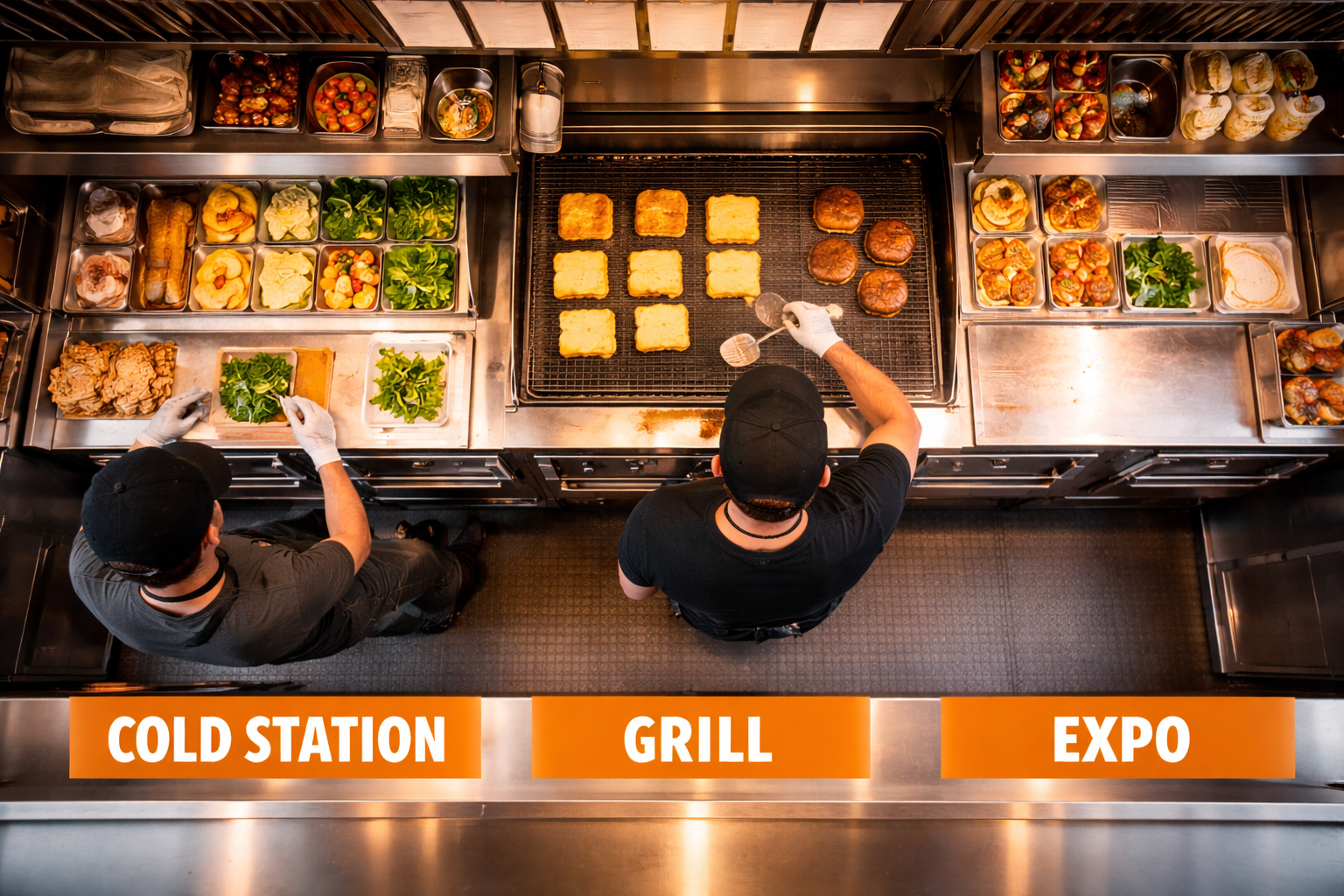
Think of a food truck kitchen as a miniature assembly line. Food truck kitchen design starts with the menu, then works backward to arrange equipment in the exact order that food is prepared and served.
For a gourmet grilled cheese operation, that usually means:
- 1Cold storage for breads, cheeses, and toppings near the start of the line.
- 2A prep counter where sandwiches are built and buttered or oiled.
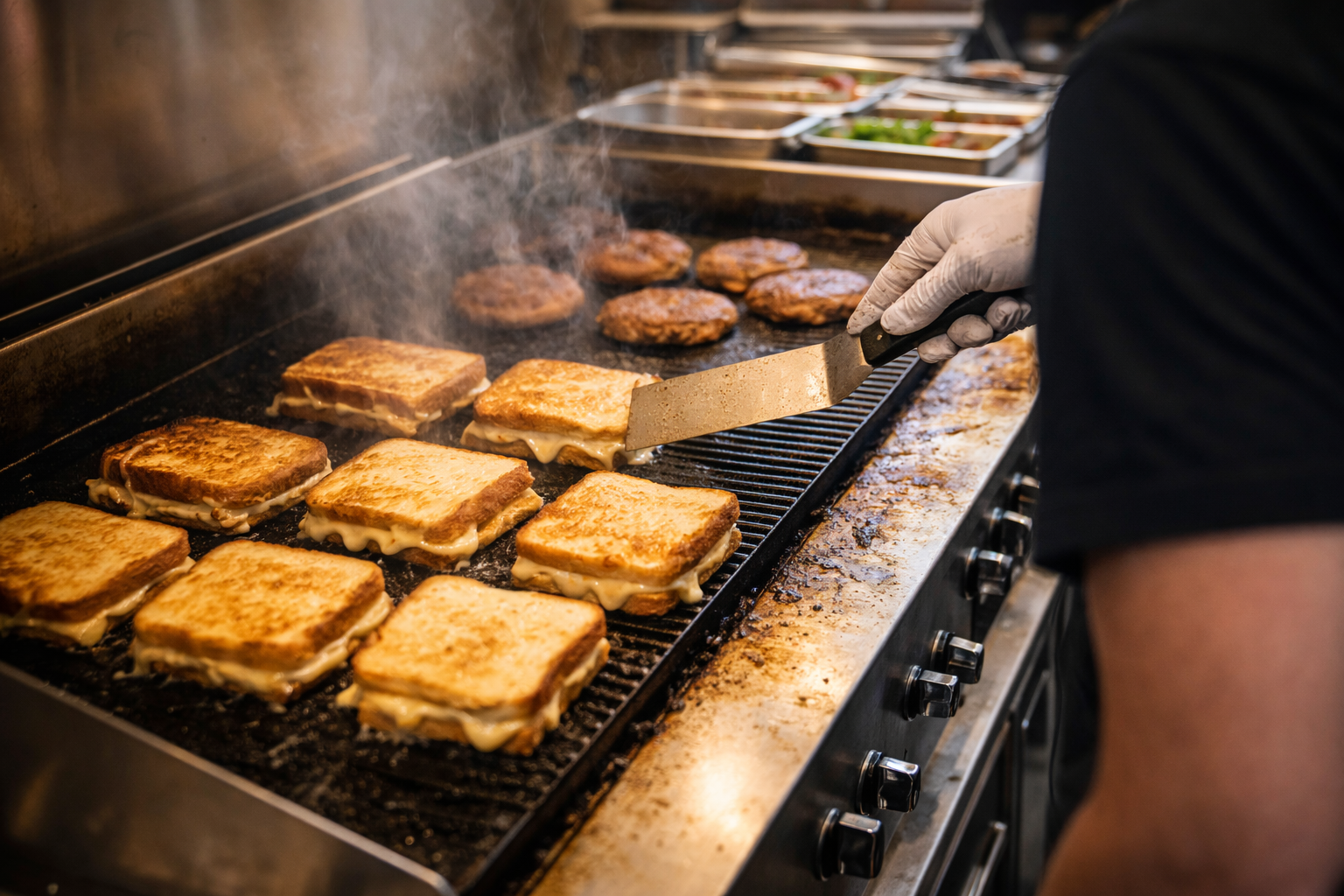
- 3A flat‑top grill or combination of grills that can handle multiple sandwiches at once.
- 4Holding space or a finishing area where sandwiches are cut, boxed, and garnished.
- 5An expo shelf near the service window where orders are checked and handed out.
The key is minimizing backtracking. Crew should not have to step around each other or turn their bodies repeatedly just to grab a pan or reach a topping. In a well‑designed kitchen, most motions are forward, side‑to‑side, or within arm’s reach.
Managing Heat Zones and Comfort in a Tiny Space
The phrase “behind the burner” is literal. Flat‑tops, fryers, and ovens generate serious heat in a metal box with limited square footage. Good food truck kitchen design treats heat like another ingredient that has to be controlled.
A typical approach includes:
Dedicated Hot Wall
Grills and fryers sit under a strong exhaust hood on one side of the truck, concentrating heat in a single zone where ventilation is strongest.
Separated Cold Equipment
Refrigerators, prep tables, and freezers are positioned away from the hottest areas so compressors are not constantly fighting the heat, keeping ingredients at safe temperatures.
Heat‑Resistant Surfaces and Clearances
Surfaces and clearances keep staff from brushing up against hot metal while moving quickly through the tight space.
This matters for guest experience. In the middle of a summer wedding in South Jersey or a corporate event in Philadelphia, a crew that is fighting heat exhaustion will slow down, and ticket times will creep up. A cooler, better ventilated line means consistent output from the first sandwich to the last.
Airflow, Ventilation, and Safety
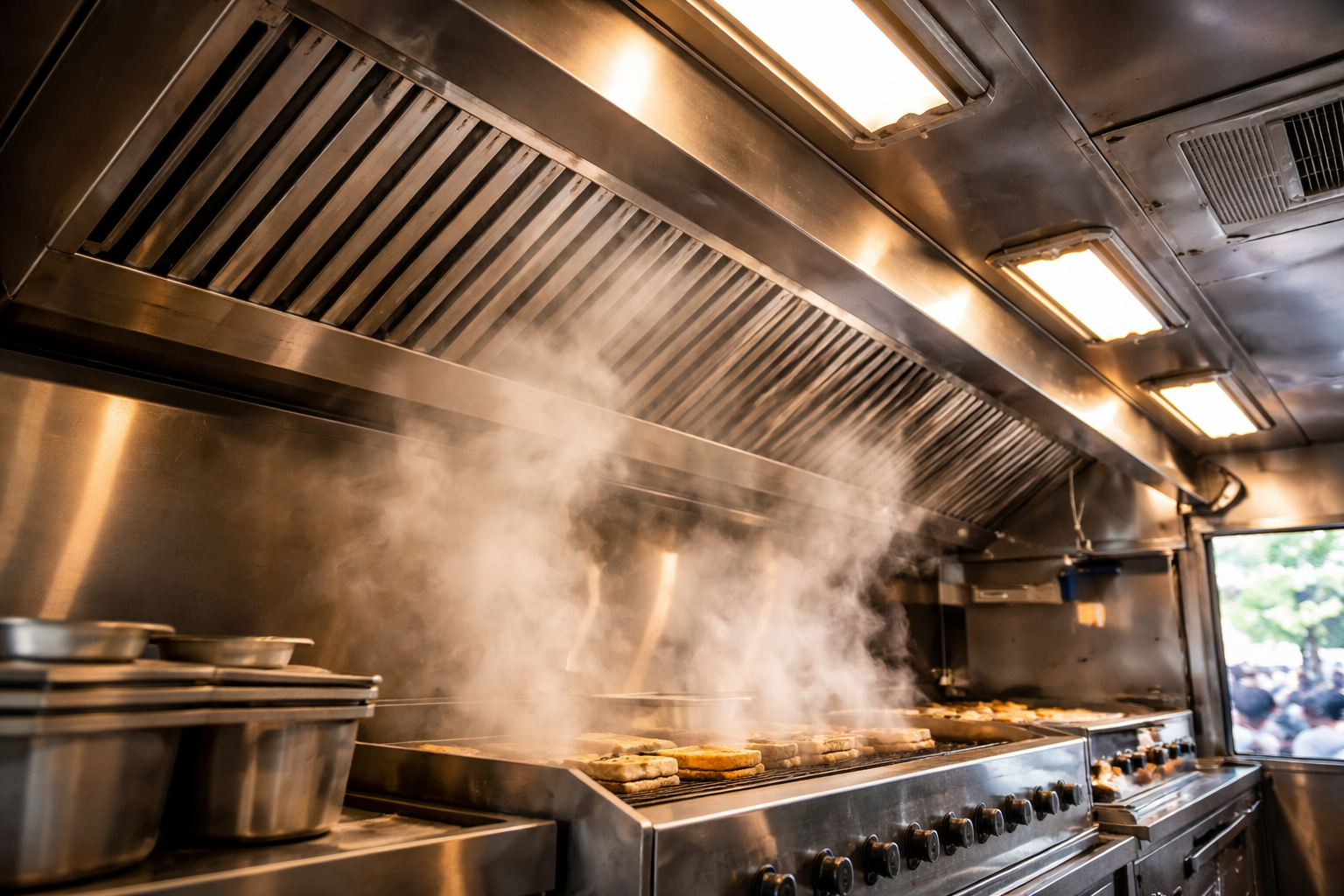
Airflow in a food truck is about more than comfort—it is about safety, visibility, and keeping the workspace food‑safe. A good ventilation system clears grease vapors, smoke, and steam while pulling fresh air in to replace what is exhausted.
Behind the scenes, that usually means:
High‑Powered Hood System
The hood is matched to the size and type of cooking equipment, ensuring it can handle the volume of grease, smoke, and steam produced during peak service.
Strategic Makeup Air
Fresh air intakes are placed so the truck is not under heavy negative pressure, which can make doors hard to open and pull in dust from outside.
Accessible Ducting and Filters
Ducting and filters are designed for easy access and cleaning between events, maintaining air quality and reducing fire risk.
For catering, especially at weddings and corporate events in Bucks County or Montgomery County, this translates into fewer smoke clouds at the window, a cleaner smell around the truck, and a more professional presence in photos and videos.
Prep Flow: How Orders Move Through the Truck
Prep flow is where food truck kitchen design really shows its value. When you watch a well‑run truck at a wedding or company picnic, you are seeing a choreographed system, not just random cooking.
A typical grilled cheese flow looks like this:
- 1Order is received at the window or via a tablet.
- 2The “cold station” pulls bread, cheese, and toppings, then assembles the raw sandwich.
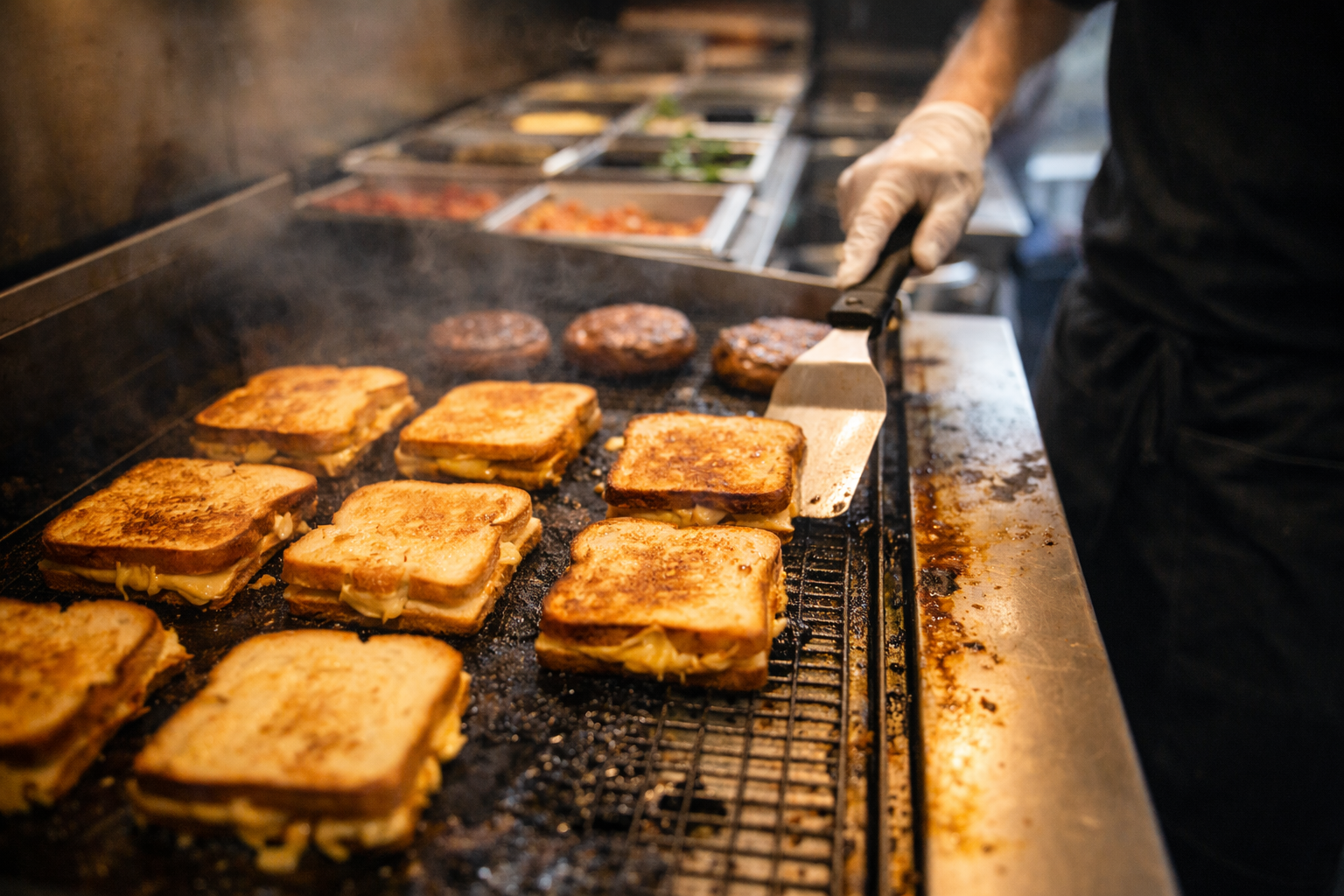
- 3The sandwich moves down the line to the “hot station” for grilling.
- 4Finished sandwiches land on a cutting board or finishing station to be sliced and boxed.
- 5The expo person checks the ticket, adds any sides, calls the name, and hands the food out.
The micro‑engineering lives in small details: where the ticket rail hangs, which hand the cook uses to grab cheese, where the tongs rest between sandwiches, how close the bread bin is to the grill. When everything is within a step or a reach, the team can keep pace with high‑volume service at peak times without sacrificing quality.
Storage, Restocking, and Working a Long Event
Storage makes or breaks longer events—especially weddings and corporate catering days that run for several hours or across multiple service windows. The truck has to hold enough product to feed a large guest count while still leaving room for staff to move.
Smart storage design in a food truck kitchen includes:
Under‑Counter Fridges and Freezers
These double as work surfaces, maximizing every square inch of counter space while keeping ingredients cold and accessible.
Overhead Shelving
Non‑perishables, packaging, and backup supplies are stored overhead, keeping the main work surfaces clear for food prep.
Labeled Bins and Containers
Dedicated, labeled containers mean ingredients can be restocked quickly between rushes without guesswork or fumbling.
Staging Plans
A clear plan for where additional product is staged—in the truck, a support vehicle, or a nearby walk‑in if available at the venue.
For events across New Jersey, Camden County, Mercer County, or the Philadelphia suburbs, this is what keeps service consistent from the first neighborhood block party of the day to a late‑night wedding snack later that evening.
Planning Checklist
If you are evaluating a food truck for your event, asking a few kitchen‑focused questions will tell you a lot about how smoothly your catering will run.
- 1Ask how the truck's kitchen is laid out for your menu and guest count.
- 2Confirm that the truck has enough grill or cooking surface to handle your peak service window.
- 3Ask where cold storage is located and how food safety is maintained during long events.
- 4Confirm the ventilation and generator setup, especially for indoor-adjacent spaces or courtyards.
- 5Ask how many crew members will be on the truck and what roles they play on the line.
- 6Discuss how orders are taken (window, tickets, or tablets) and how that affects guest flow.
- 7Confirm how the truck will restock during your event if you have a large guest count.
- 8Ask where the truck prefers to park relative to guests to keep the service window accessible and safe.
These questions do not just show you are detail‑oriented—they help your catering partner match their setup to your specific venue in New Jersey, South Jersey, or the Philadelphia region.
Common Mistakes Hosts Make About Food Truck Kitchens
Assuming All Food Trucks Are Built the Same
From the outside, many trucks look similar. Inside, the layout can range from tightly engineered to barely functional. Assuming every truck can handle a high‑volume wedding or corporate lunch the same way is risky. Focusing on kitchen design and workflow during the booking process helps you avoid surprises.
Ignoring Heat and Ventilation When Choosing a Parking Spot
Placing the truck in a picturesque but enclosed courtyard without airflow can trap heat and smoke. That is hard on staff and guests. When planning food truck catering in Philadelphia or dense New Jersey towns, balance aesthetics with air movement and exhaust direction.
Overloading the Menu Without Considering Line Capacity
A small kitchen can only push so many different menu items at once. Adding too many variations and customizations burdens the line and slows everything down. A streamlined menu that matches the kitchen’s layout will always produce a better experience than a long list of rarely ordered options.
Forgetting That Space Is Finite
In a tiny truck, every extra cooler, décor item, or unnecessary piece of equipment becomes an obstacle. When hosts request additional on‑truck displays or bulky add‑ons, they can unintentionally interfere with the line. Trust the catering team’s recommendation on what fits safely inside the working kitchen.
Not Connecting Kitchen Design to Guest Experience
Guests feel the effects of kitchen design through line length, ticket times, and consistency. When hosts only look at the exterior branding and not the interior engineering, they miss a key part of what makes food truck wedding catering, corporate food truck catering, or private party food truck catering successful.
Why Kitchen Design Matters for Your Event
The magic of a great food truck event is that guests never see the work happening behind the burner. They just experience hot, consistent food and a line that keeps moving. Underneath that is careful food truck kitchen design: equipment lined up in the right order, airflow managed, storage maximized, and prep flow tuned for your guest count.
Whether you are planning food truck wedding catering in Bucks County, corporate food truck catering in Center City Philadelphia, or private party food truck catering anywhere in New Jersey, asking a few smart questions about how the kitchen is engineered will help you choose a partner who can execute, not just show up.
If you are ready to bring a gourmet grilled cheese truck with a kitchen built specifically for high‑volume events to your next celebration, contact Grilly Cheese to start planning.
Ready to Book a Food Truck With a Kitchen Built for Your Event?
Grilly Cheese brings a micro‑engineered kitchen and a crew trained for high‑volume service to weddings, corporate events, and private parties across New Jersey and the greater Philadelphia region.
Related Articles
Private Party Food Truck Catering in New Jersey
How to plan the perfect backyard event with a gourmet food truck.
Corporate Food Truck Catering in New Jersey
A practical planning guide for office lunches and corporate events.
Food Truck Wedding Catering in New Jersey
Venue logistics, guest flow, timing, and menu planning for your reception.
How Much Does Food Truck Catering Cost?
Pricing breakdown for food truck catering at weddings, corporate events, and parties.